Difference Between Hand and Rotary Endodontic Instruments – Hand vs Rotary Endodontic Instruments
Endodontic treatment, commonly known as root canal therapy, has seen tremendous advancements in recent years. One of the key areas of evolution is in the instruments used to clean and shape root canals — namely, hand instruments and rotary instruments. Both play a vital role in successful endodontic outcomes, but they differ significantly in design, technique, efficiency, and clinical results.
In this blog, we’ll explore the difference between hand and rotary endodontic instruments, their advantages and limitations, and when each is most effectively used.
What Are Hand Endodontic Instruments?
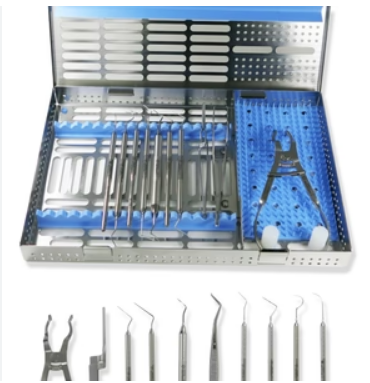
Hand endodontic instruments are manually operated tools used by dentists to clean and shape the root canal system. These instruments are typically made from stainless steel and are available in various types such as:
- K-files
- H-files (Hedström files)
- Reamers
The clinician holds the instrument between their fingers and performs filing or reaming motions to mechanically remove pulp tissue and shape the canal.
Advantages of Hand Instruments
- Greater tactile feedback: The dentist can “feel” the internal anatomy of the canal better, reducing the risk of perforations.
- Better control in curved canals: Especially useful for narrow or highly curved roots.
- Lower equipment cost: No need for additional rotary motors or systems.
- Useful for initial canal negotiation: Excellent for locating and exploring the canal before using rotary files.
Limitations of Hand Instruments
- Time-consuming: Manual filing requires more chair time.
- Operator fatigue: Repetitive hand movements can cause fatigue, especially in multi-rooted teeth.
- Less consistent canal shaping: Due to human error and limited cutting efficiency.
What Are Rotary Endodontic Instruments?
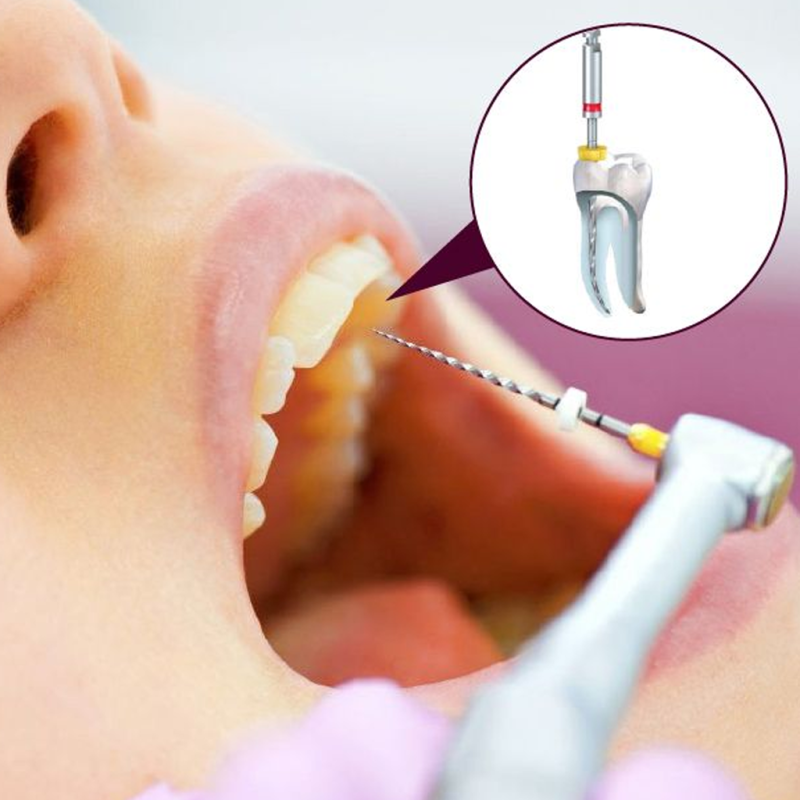
Rotary endodontic instruments are powered by an electric or air-driven handpiece that rotates nickel-titanium (NiTi) files within the canal. NiTi alloys offer superior flexibility, allowing the instrument to follow the natural curvature of the canal with minimal risk of transportation or ledging.
Advantages of Rotary Instruments
- Faster and more efficient preparation: Significantly reduces treatment time.
- Consistent canal shaping: Produces smooth, tapered canal forms ideal for obturation.
- Less operator fatigue: The motor performs most of the work.
- Enhanced flexibility: NiTi files can handle curved canals with minimal deformation.
Limitations of Rotary Instruments
- Higher cost: Equipment and NiTi files are more expensive.
- Risk of instrument fracture: Particularly if used improperly or beyond their recommended lifespan.
- Less tactile sensation: The operator may not feel canal irregularities as distinctly as with hand files.
- Requires experience and training: Proper torque, speed settings, and handling are critical.
Key Differences: Hand vs Rotary Endodontic Instruments
| Feature | Hand Instruments | Rotary Instruments |
|---|---|---|
| Material | Usually stainless steel | Nickel-Titanium (NiTi) |
| Operation | Manual | Motor-driven |
| Flexibility | Less flexible | Highly flexible |
| Tactile Feedback | Excellent | Limited |
| Canal Preparation Time | Longer | Shorter |
| Efficiency | Moderate | High |
| Risk of Instrument Fracture | Low | Higher if misused |
| Cost | Economical | Expensive |
| Ideal Use | Curved or complex canals | Straight or moderately curved canals |
When to Use Each
- Hand Instruments are best for:
- Initial canal scouting and negotiation.
- Extremely curved or calcified canals.
- Cases where tactile sensitivity is crucial.
- Rotary Instruments are ideal for:
- Routine root canal treatments with moderate curvature.
- Cases requiring efficiency and consistent shaping.
- Practices equipped with rotary endodontic systems and trained staff.
Conclusion
Both hand and rotary endodontic instruments have their place in modern endodontic practice. While hand files offer precision and control in complex cases, rotary files provide speed, efficiency, and uniform shaping. The best results often come from a hybrid approach, where clinicians begin with hand files for canal negotiation and switch to rotary instruments for cleaning and shaping.
Ultimately, the choice depends on the clinical scenario, dentist’s expertise, and available technology. By understanding the differences between these two systems, dental professionals can optimize patient outcomes and ensure safer, more efficient root canal treatments.