
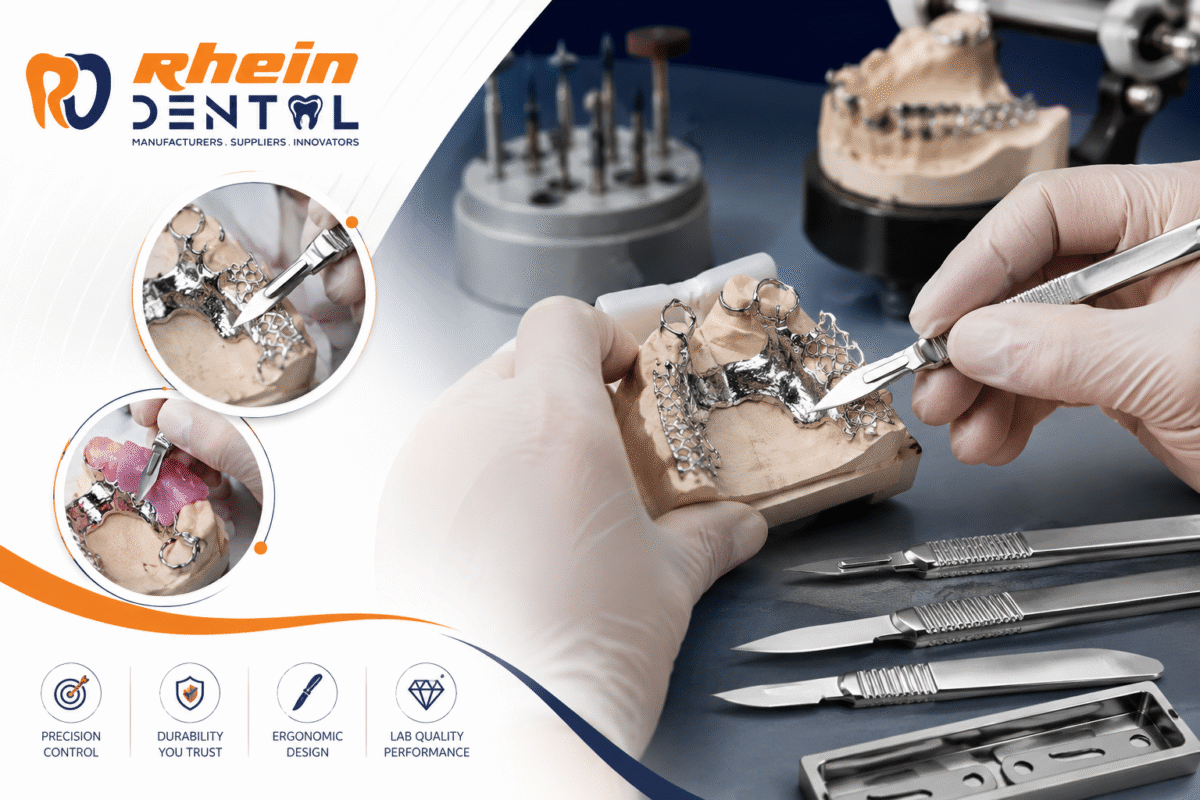
Precision is one of the most critical elements in dental laboratory procedures, especially during the fabrication and adjustment of removable partial denture (RPD) frameworks. Even the smallest inaccuracies can affect fit, comfort, retention, and long-term prosthetic success. Among the essential hand instruments used for detailed laboratory adjustments are trimming knives and scalpel handles, which provide technicians with the control required for delicate cutting, carving, trimming, and contouring tasks.
Although modern dental labs increasingly utilize digital workflows and rotary equipment, manual cutting instruments remain indispensable for fine adjustments and finishing procedures. From trimming wax patterns to refining acrylic margins and adjusting framework components, these tools continue to play a vital role in prosthetic accuracy.
This article explores the functions, applications, types, techniques, and maintenance of trimming knives and scalpel handles in removable partial denture framework adjustment.
Understanding Removable Partial Denture Framework Adjustment
A removable partial denture framework must fit accurately within the patient’s oral structures while maintaining proper support, stability, and retention. Laboratory adjustment procedures help refine the framework before final delivery.
These adjustments often involve:
- Trimming wax patterns
- Refining acrylic resin
- Contouring denture borders
- Removing excess material
- Adjusting clasp areas
- Smoothing irregularities
- Modifying soft tissue contact regions
Precision hand instruments allow dental technicians to perform these procedures with greater control than many powered tools.
Importance of Precision Cutting in the Dental Lab
Minor errors during trimming or adjustment can lead to major clinical complications.
Poorly adjusted frameworks may cause:
- Patient discomfort
- Tissue irritation
- Inadequate retention
- Occlusal discrepancies
- Pressure sores
- Prosthesis instability
Precision cutting techniques help preserve the integrity of the prosthetic design while ensuring accurate adaptation to oral anatomy.
What Are Trimming Knives?
Trimming knives are specialized dental laboratory instruments designed for controlled cutting, carving, scraping, and contouring of dental materials.
They are commonly used for:
- Wax trimming
- Acrylic resin shaping
- Border refinement
- Flash removal
- Surface contouring
These knives provide technicians with enhanced tactile sensitivity and precision.
What Are Scalpel Handles?
Scalpel handles are reusable instrument bodies that hold replaceable surgical blades of varying sizes and shapes.
In dental laboratory procedures, scalpel handles are widely used for:
- Fine detail trimming
- Precision incisions
- Wax carving
- Resin modification
- Margin refinement
The interchangeable blade system allows technicians to select the ideal blade for specific cutting requirements.
Common Types of Trimming Knives Used in Dental Labs
1. Wax Knives
Wax knives are designed specifically for carving and shaping wax patterns.
Applications:
- RPD wax-up modification
- Border contouring
- Pattern refinement
Advantages:
- Excellent control
- Smooth carving action
- Precise contour formation
2. Plaster Knives
Plaster knives feature strong blades suitable for trimming gypsum products and rigid materials.
Uses:
- Cast trimming
- Stone model modification
- Removing excess material
Benefits:
- Durable construction
- Strong cutting edges
3. Acrylic Trimming Knives
These knives are specifically intended for acrylic resin adjustments.
Functions:
- Flash removal
- Margin smoothing
- Denture contouring
Clinical Importance:
They help achieve smooth prosthesis borders that improve patient comfort.
Common Scalpel Blade Types in Dental Laboratory Work
Different blade shapes offer varying levels of cutting precision.
No. 11 Blade
Characteristics:
- Sharp pointed tip
- Precise linear cutting
Common Uses:
- Detail carving
- Small incisions
- Tight access areas
No. 15 Blade
Characteristics:
- Curved cutting edge
- Excellent control
Applications:
- Margin trimming
- Wax refinement
- Soft contour shaping
No. 12 Blade
Characteristics:
- Hooked design
Uses:
- Curved cuts
- Difficult-to-access areas
Each blade design supports specific trimming and contouring techniques.
Materials Commonly Adjusted with Trimming Instruments
Wax
Used extensively during framework pattern fabrication.
Acrylic Resin
Adjusted during denture finishing and contouring procedures.
Gypsum Products
Dental stone casts frequently require trimming and modification.
Thermoplastic Materials
Modern flexible partial dentures may also require precise hand adjustments.
Precision Cutting Techniques for RPD Framework Adjustment
Proper technique is essential for maintaining prosthetic accuracy and preventing material damage.
1. Controlled Incremental Trimming
Large cuts should be avoided whenever possible.
Best Practice:
Remove small amounts of material gradually to maintain precision and avoid over-adjustment.
Benefits:
- Greater control
- Reduced material waste
- Improved symmetry
2. Stabilized Hand Positioning
Hand stability significantly affects cutting accuracy.
Technique:
- Support the wrist against a stable surface
- Use controlled finger movements
- Maintain consistent blade angles
This minimizes accidental slips and uneven cuts.
3. Directional Cutting
Cutting direction should follow the natural contour of the prosthesis.
Advantages:
- Smoother surfaces
- Reduced gouging
- Improved finish quality
4. Proper Blade Selection
Using the correct blade for the task improves efficiency and safety.
Example:
- Fine detail work → No. 15 blade
- Deep precision cuts → No. 11 blade
5. Sequential Finishing
After trimming, surfaces should be progressively refined.
Typical Sequence:
- Gross trimming
- Fine contouring
- Smoothing
- Polishing
This produces a clean, professional prosthetic finish.
Safety Considerations in Dental Laboratory Cutting Procedures
Sharp instruments require careful handling to prevent injuries.
Important Safety Practices:
- Replace dull blades promptly
- Use blade guards when not in use
- Cut away from the body
- Maintain organized workspaces
- Dispose of used blades safely
Safe instrument handling reduces occupational hazards in the dental laboratory.
Maintenance of Trimming Knives and Scalpel Handles
Proper maintenance ensures long-term performance and cutting precision.
Cleaning
Remove wax, resin, and debris after each use.
Sterilization
Metal handles should be sterilized according to laboratory protocols.
Blade Replacement
Dull blades compromise accuracy and increase injury risk.
Storage
Store instruments in dry, protected environments to prevent corrosion.
Regular maintenance preserves instrument effectiveness and extends service life.
Advantages of Using Manual Precision Instruments
Despite technological advancements, manual instruments offer several important advantages.
Superior Tactile Feedback
Technicians can feel subtle surface variations during trimming.
Greater Fine Detail Control
Hand instruments allow precise modifications in delicate areas.
Reduced Heat Generation
Unlike rotary tools, knives generate minimal heat that could distort materials.
Cost-Effective
Manual instruments remain economical and versatile laboratory tools.
Integration with Modern Digital Dentistry
Even in digitally driven workflows, trimming knives and scalpels remain highly relevant.
Current Applications Include:
- Refining 3D printed patterns
- Adjusting milled prosthetic components
- Modifying printed resin frameworks
- Finishing CAD/CAM restorations
Manual finishing techniques continue to complement digital manufacturing technologies.
Common Errors During Framework Adjustment
Over-Trimming
Excessive material removal may weaken the framework or compromise fit.
Uneven Contouring
Inconsistent trimming can affect prosthesis stability.
Dull Blade Usage
Dull blades create rough surfaces and reduce cutting accuracy.
Excessive Pressure
Too much force increases the risk of slipping or damaging the prosthesis.
Proper training and instrument selection help minimize these issues.
Choosing Quality Dental Laboratory Cutting Instruments
High-quality instruments improve precision, durability, and workflow efficiency.
Key Features to Consider:
- Ergonomic handles
- Corrosion resistance
- Blade compatibility
- Sharp cutting edges
- Comfortable grip design
Reliable instruments support consistent laboratory outcomes and technician comfort.
Conclusion
Trimming knives and scalpel handles remain essential instruments in removable partial denture framework adjustment and dental laboratory procedures. Their ability to provide controlled, detailed cutting makes them invaluable for refining wax patterns, shaping acrylic resin, and achieving accurate prosthetic contours.
While digital technologies continue to reshape modern dentistry, precision hand instruments still offer unmatched tactile control and finishing accuracy. Proper technique, blade selection, maintenance, and safety practices all contribute to successful removable partial denture fabrication and long-term patient satisfaction.
For dental technicians and prosthodontic professionals alike, mastering precision cutting techniques is fundamental to delivering high-quality removable prosthetic restorations.