
The global orthodontic industry continues to expand as more patients seek braces, aligners, and advanced orthodontic treatments. Consequently, orthodontic clinics, distributors, hospitals, and dental supply companies require a reliable source of wholesale orthodontic instruments that offer excellent quality and competitive pricing.
Whether you are launching a new dental distribution business or expanding your product portfolio, understanding wholesale orthodontic instrument pricing is essential for maintaining healthy profit margins while delivering value to your customers.
This comprehensive guide explains how wholesale pricing works, what influences pricing, how dealers can negotiate better rates, and how to choose the right orthodontic instruments manufacturer for long-term business success.
Why Wholesale Orthodontic Instruments Are in High Demand
The demand for orthodontic procedures has increased worldwide due to:
- Rising awareness of dental aesthetics
- Growth of clear aligner treatments
- Expansion of orthodontic clinics
- Increased government healthcare spending
- Higher demand for pediatric orthodontics
- Growth in cosmetic dentistry
As a result, orthodontic instrument dealers are constantly searching for dependable suppliers capable of providing premium instruments at wholesale prices.
What Are Wholesale Orthodontic Instruments?
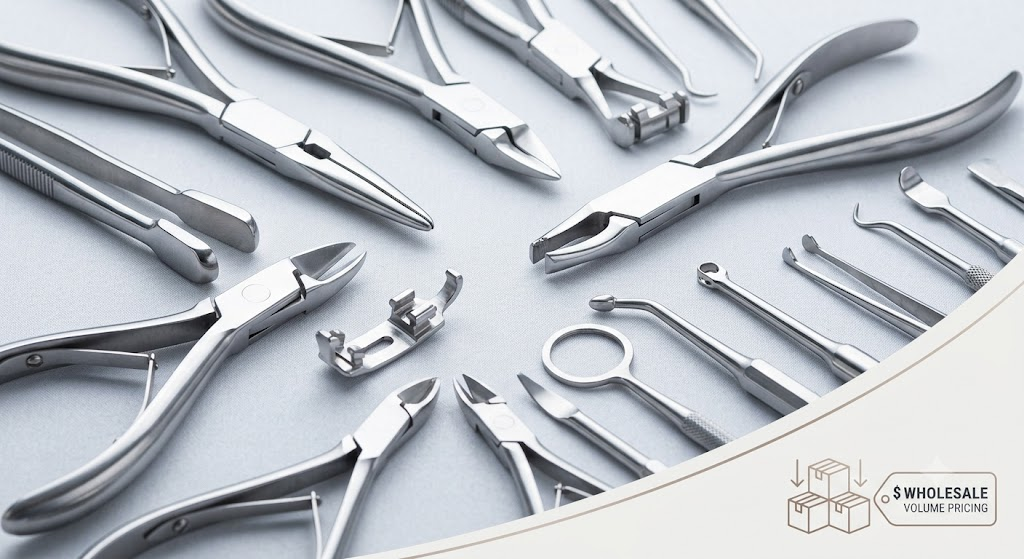
Wholesale orthodontic instruments are professional dental tools purchased directly from manufacturers or authorized suppliers in large quantities at discounted prices.
These instruments include:
- Orthodontic Pliers
- Band Removing Pliers
- Bracket Positioning Tweezers
- Distal End Cutters
- Wire Cutters
- Ligature Directors
- Mathieu Needle Holders
- Band Pushers
- Ligature Cutters
- Weingart Pliers
- Bird Beak Pliers
- Bracket Holders
- Elastic Placement Instruments
- Arch Forming Pliers
- Torqueing Pliers
Buying directly from an orthodontic instruments manufacturer significantly lowers procurement costs compared to purchasing individual retail items.
Who Buys Orthodontic Instruments Wholesale?
Wholesale customers commonly include:
- Dental distributors
- Medical equipment importers
- Orthodontic clinics
- Government hospitals
- Private hospitals
- Dental universities
- Procurement agencies
- Healthcare organizations
- Online dental retailers
- International wholesalers
Each buyer benefits from volume discounts and long-term pricing agreements.
How Wholesale Orthodontic Instrument Pricing Works
Wholesale pricing depends on several important factors rather than one fixed price.
1. Order Quantity
The larger the order, the lower the unit cost.
Typical pricing tiers include:
| Order Quantity | Typical Discount |
|---|---|
| 20–50 Pieces | Small Dealer Pricing |
| 50–200 Pieces | Distributor Pricing |
| 200–1000 Pieces | Wholesale Pricing |
| 1000+ Pieces | Factory Direct Pricing |
Large-volume buyers generally receive significantly better pricing.
2. Instrument Complexity
Not all orthodontic instruments require the same manufacturing process.
Simple instruments generally cost less than:
- Distal End Cutters
- Hard Wire Cutters
- Torqueing Pliers
- Precision Orthodontic Pliers
Complex instruments require:
- Precision machining
- Tungsten carbide inserts
- Heat treatment
- Hand finishing
- Multiple quality inspections
These additional manufacturing steps increase production costs.
3. Material Quality
Professional manufacturers usually produce instruments using:
- German Stainless Steel
- Japanese Stainless Steel
- Medical-grade Stainless Steel
- Premium Surgical Stainless Steel
Higher-grade steel provides:
- Longer lifespan
- Better corrosion resistance
- Sharper cutting edges
- Improved sterilization performance
Although premium materials increase manufacturing costs, they reduce replacement frequency and improve long-term value.
4. Manufacturing Standards
Certified manufacturers typically comply with:
- ISO Quality Management Systems
- CE certification requirements
- Medical device manufacturing regulations
- Quality control inspections
- Traceability systems
Certified production often commands a higher wholesale price because it supports consistent product quality and regulatory compliance.
What Affects Wholesale Orthodontic Instrument Prices?
Several market variables influence wholesale pricing.
Raw Material Costs
Stainless steel prices fluctuate due to:
- Global supply chains
- Mining output
- Transportation costs
- Currency exchange rates
These factors directly affect manufacturing expenses.
Labor Costs
Orthodontic instruments require skilled technicians for:
- Forging
- Grinding
- Assembly
- Polishing
- Calibration
- Final inspection
Experienced craftsmanship contributes to higher-quality products and influences final pricing.
Packaging Options
Dealers can choose:
- Standard packaging
- Individual pouch packaging
- Retail-ready boxes
- Premium branded packaging
- Sterile packaging
Customized packaging generally increases unit costs but enhances brand presentation.
Private Label Services
Many manufacturers provide OEM and private-label solutions.
These services may include:
- Custom laser engraving
- Company logos
- Custom packaging
- Product labeling
- Barcodes
- Product manuals
Private branding allows distributors to build their own market identity.
Benefits of Buying Directly from an Orthodontic Instruments Manufacturer
Working directly with a manufacturer offers several advantages.
Better Pricing
Factory-direct sourcing eliminates multiple intermediaries, reducing overall costs.
Consistent Product Quality
Manufacturers maintain standardized production processes and quality checks.
Custom Manufacturing
Many factories can produce instruments tailored to customer specifications.
Stable Inventory
Direct manufacturers often maintain larger production capacities and inventory.
Long-Term Partnerships
Reliable suppliers frequently provide:
- Dealer pricing
- Priority production
- Faster deliveries
- Dedicated account management
- Technical support
Popular Wholesale Orthodontic Instruments
The highest-demand products typically include:
- Bird Beak Pliers
- Weingart Pliers
- Distal End Cutters
- Hard Wire Cutters
- Bracket Holding Tweezers
- Ligature Directors
- Mathieu Needle Holders
- Band Pushers
- Bracket Removing Pliers
- Utility Pliers
- Cinch Back Pliers
- Elastic Placement Instruments
- Adhesive Removing Pliers
- Arch Forming Pliers
- Ligature Cutters
Dealers often stock these instruments because they are routinely used in orthodontic practices.
How Dealers Can Negotiate Better Wholesale Prices
Successful dealers often secure better pricing by:
- Ordering larger quantities
- Combining multiple product categories
- Establishing long-term purchasing agreements
- Scheduling regular repeat orders
- Requesting annual pricing contracts
- Consolidating shipments to reduce freight costs
Building a long-term relationship with a manufacturer can also improve pricing and service over time.
What to Look for in an Orthodontic Instruments Supplier
Before selecting a supplier, evaluate:
Manufacturing Experience
Choose manufacturers with extensive experience in dental instrument production.
Certifications
Look for recognized quality certifications and regulatory compliance relevant to your market.
Production Capacity
Confirm the supplier can handle increasing order volumes.
Quality Control
Ask about inspection procedures and product testing.
Export Experience
Suppliers experienced in international shipping are better equipped to manage documentation, packaging, and logistics.
Customer Support
Responsive communication and after-sales support are valuable for long-term partnerships.
Why Quality Matters More Than Low Prices
Low-cost instruments may seem attractive initially, but poor manufacturing quality can lead to:
- Premature wear
- Corrosion
- Cutting-edge failure
- Instrument breakage
- Customer complaints
- Increased replacement costs
High-quality orthodontic instruments generally provide better durability, improved clinical performance, and stronger customer satisfaction.
Global Trends in the Wholesale Orthodontic Instruments Market
Several trends are shaping the industry:
- Increased demand for reusable surgical-grade instruments
- Growth in private-label manufacturing
- Expansion of digital orthodontics
- Rising demand from emerging markets
- Greater emphasis on quality assurance and traceability
- Increased interest in sustainable manufacturing and packaging
Dealers who adapt to these trends are well positioned for long-term growth.
Final Thoughts
The market for wholesale orthodontic instruments continues to grow as orthodontic treatment becomes more accessible worldwide. Dealers who understand pricing structures, prioritize quality, and establish strong relationships with experienced manufacturers can improve profitability while meeting customer expectations.
Instead of focusing solely on the lowest price, evaluate suppliers based on manufacturing expertise, quality standards, production capacity, and long-term reliability. By balancing cost with quality and service, orthodontic instrument dealers can build a sustainable business and remain competitive in the global dental market.
Frequently Asked Questions:
Wholesale orthodontic instruments are dental tools purchased in bulk directly from manufacturers or authorized distributors at discounted prices.
Dental distributors, hospitals, orthodontic clinics, universities, procurement agencies, and medical equipment importers commonly purchase wholesale.
Pricing depends on order quantity, material quality, manufacturing complexity, certifications, packaging, customization, and shipping costs.
Yes. Many manufacturers offer OEM and private-label services, including custom branding, laser marking, and packaging.
Factory-direct purchasing often provides better pricing, consistent quality, customization options, and more reliable inventory.