
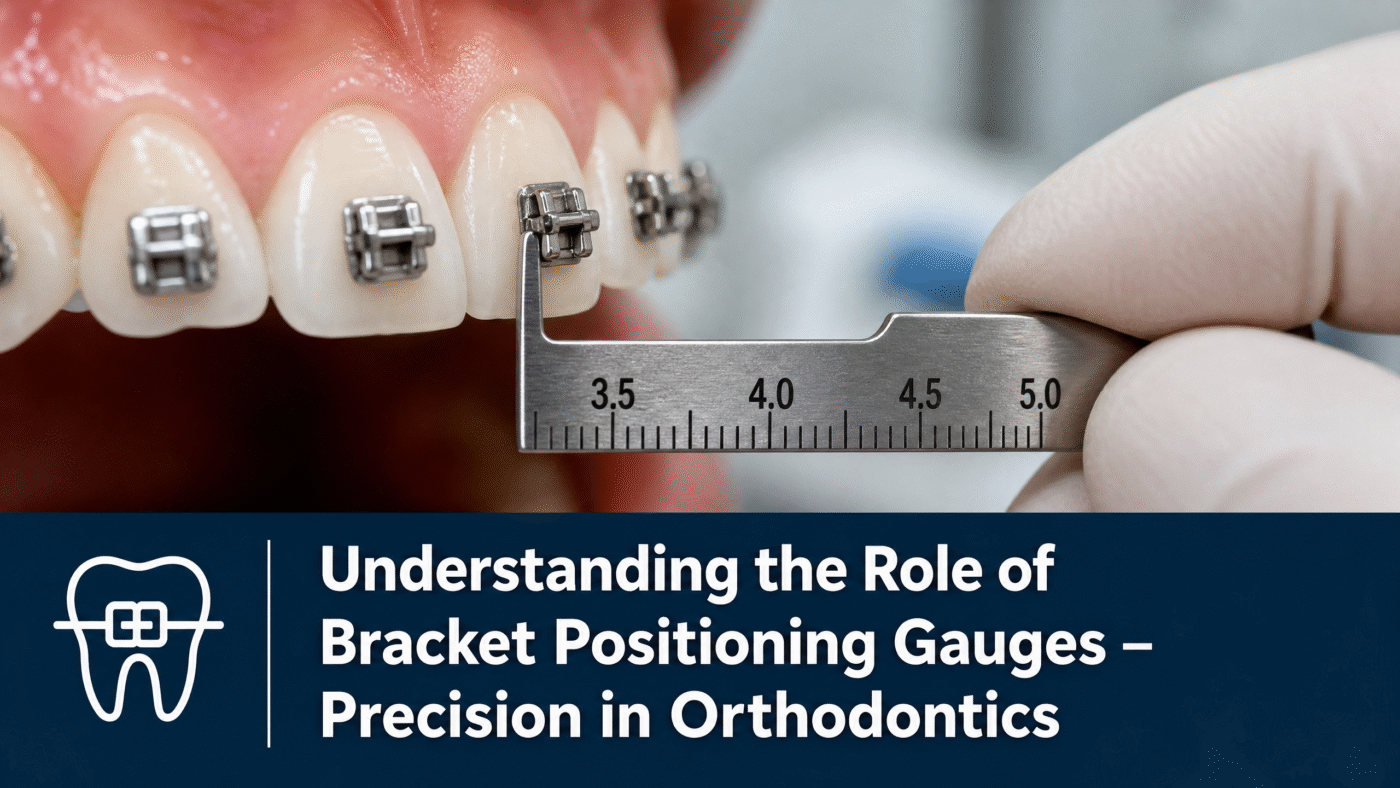
Successful orthodontic treatment depends on far more than high-quality brackets and archwires. One of the most important—and often underestimated factors is precise bracket positioning. Even a slight variation in bracket height or angulation can affect tooth movement, prolong treatment time, and require additional adjustments(Bracket positioning gauges).
This is where a bracket positioning gauge becomes an essential orthodontic instrument.
Bracket positioning gauges help clinicians place orthodontic brackets at the correct height and position, ensuring consistent tooth movement and improved treatment outcomes. Whether using traditional metal braces or ceramic brackets, these instruments provide the precision needed for efficient orthodontic care(Bracket positioning gauges).
In this guide, we’ll explore what bracket positioning gauges are, why they matter, their different types, clinical applications, and how to choose the right instrument for your orthodontic practice (Bracket positioning gauges).
What Is a Bracket Positioning Gauge?
A bracket positioning gauge is a precision orthodontic instrument designed to measure and maintain the correct vertical height during bracket bonding.
The gauge allows orthodontists to position each bracket consistently relative to the tooth’s incisal edge or cusp tip. Maintaining accurate bracket height helps ensure that planned tooth movements occur as intended throughout treatment.
Unlike visual estimation alone, a bracket positioning gauge offers measurable accuracy that improves clinical consistency.
Why Accurate Bracket Placement Matters
Orthodontic treatment relies on biomechanics. Every bracket acts as a control point that guides tooth movement.
Improper bracket placement can lead to:
- Uneven tooth alignment
- Incorrect tooth torque
- Poor rotational control
- Inadequate occlusion
- Increased finishing adjustments
- Extended treatment time
- Additional rebonding procedures
Even a small positioning error of less than one millimeter may significantly affect treatment efficiency.
Using a bracket positioning gauge minimizes these risks and promotes predictable results.
How a Bracket Positioning Gauge Works
The instrument is designed with calibrated measurements that allow clinicians to position brackets at standardized heights.
The clinician typically:
- Determines the appropriate bracket height based on the treatment plan.
- Places the measuring tip against the incisal edge or cusp tip.
- Aligns the bracket with the selected measurement.
- Bonds the bracket while maintaining the desired position.
Because the measurement is fixed, every tooth receives consistent bracket placement according to the orthodontic prescription.
Components of a Bracket Positioning Gauge
Although designs vary by manufacturer, most gauges include:
Measuring Tips
Calibrated ends representing different bracket heights.
Handle
Ergonomically designed for precise handling during bonding.
Height Markings
Common measurements include:
- 3.5 mm
- 4.0 mm
- 4.5 mm
- 5.0 mm
Some gauges offer additional measurement increments for specialized treatment plans.
Stainless Steel Construction
Most professional orthodontic gauges are manufactured from high-grade surgical stainless steel for:
- Corrosion resistance
- Sterilization compatibility
- Long service life
- Dimensional accuracy
Types of Bracket Positioning Gauges
Different orthodontic practices may prefer different gauge styles depending on workflow and clinical preferences.
1. Boone Bracket Positioning Gauge
The Boone Gauge is among the most widely used orthodontic instruments.
Features include:
- Multiple height settings
- Compact design
- High measurement accuracy
- Easy chairside use
Ideal for routine orthodontic bonding procedures.
2. Star Bracket Positioning Gauge
Designed with multiple measuring points that allow rapid bracket positioning.
Advantages include:
- Quick measurements
- Reduced bonding time
- Excellent visibility
3. Adjustable Bracket Positioning Gauge
These instruments allow customized bracket height selection for complex orthodontic cases.
Suitable for:
- Individualized treatment plans
- Atypical tooth anatomy
- Advanced orthodontic procedures
4. Fixed Height Gauges
Designed for clinicians who routinely use one specific bracket height.
Benefits include:
- Faster workflow
- Simple operation
- Consistent measurements
Clinical Applications of Bracket Positioning Gauges
Bracket positioning gauges are used throughout orthodontic practice.
Conventional Braces
Ensuring accurate placement of metal brackets.
Ceramic Brackets
Maintaining esthetic bracket positioning.
Self-Ligating Systems
Providing consistent bonding for self-ligating brackets.
Indirect Bonding Verification
Confirming bracket positions before transfer.
Orthodontic Rebonding
Re-establishing precise bracket placement after bracket failure.
Benefits of Using a Bracket Positioning Gauge
Improved Accuracy
Precise measurements reduce placement errors.
Better Treatment Outcomes
Correct bracket positioning produces more predictable tooth movement.
Reduced Chair Time
Accurate initial bonding minimizes future repositioning.
Increased Clinical Efficiency
Standardized placement simplifies orthodontic workflows.
Enhanced Patient Satisfaction
More efficient treatment often means fewer appointments and shorter overall treatment duration.
Consistency Across Cases
Every patient benefits from reproducible bracket placement.
Bracket Positioning Gauge vs Visual Estimation
| Feature | Bracket Positioning Gauge | Visual Estimation |
|---|---|---|
| Accuracy | High | Moderate |
| Consistency | Excellent | Variable |
| Treatment Efficiency | Higher | Lower |
| Rebonding Risk | Reduced | Increased |
| Learning Curve | Easy | Experience-dependent |
While experienced orthodontists may develop excellent visual skills, measurement instruments provide greater consistency across all cases.
Best Practices for Using a Bracket Positioning Gauge
To maximize accuracy:
Select the Correct Height
Choose the measurement appropriate for each tooth and treatment objective.
Keep the Gauge Perpendicular
Proper alignment prevents measurement errors.
Maintain a Dry Bonding Field
Isolation improves bracket adhesion and placement accuracy.
Verify Before Curing
Double-check bracket position before light curing.
Sterilize After Every Use
Follow recommended sterilization protocols to maintain instrument safety and longevity.
Common Mistakes to Avoid
Avoid these frequent errors during bracket placement:
- Incorrect reference point selection
- Inconsistent measurement between teeth
- Tilting the gauge during placement
- Bonding before final verification
- Using worn or damaged instruments
Regular instrument inspection helps maintain measurement precision.
Choosing a High-Quality Bracket Positioning Gauge
When selecting orthodontic instruments, consider:
Material Quality
Choose premium surgical-grade stainless steel for durability and corrosion resistance.
Precision Manufacturing
Accurate calibration is essential for consistent measurements.
Ergonomic Design
Comfortable handling reduces clinician fatigue during bonding procedures.
Sterilization Compatibility
Ensure the instrument withstands repeated autoclave cycles without compromising accuracy.
Smooth Finish
A polished surface improves cleaning and supports infection control.
Caring for Your Bracket Positioning Gauge
Proper maintenance extends instrument life.
Recommended practices include:
- Clean immediately after use.
- Remove adhesive residue thoroughly.
- Inspect measuring tips regularly.
- Lubricate hinged components if applicable.
- Sterilize according to manufacturer guidelines.
- Store in a protective instrument cassette.
Routine maintenance helps preserve measurement accuracy over time.
Final Thoughts
A bracket positioning gauge is one of the most valuable precision instruments in modern orthodontics. Although small in size, it plays a significant role in improving bracket placement accuracy, enhancing treatment efficiency, and reducing the need for corrective adjustments.
For orthodontists aiming to deliver predictable, high-quality results, investing in a well-manufactured bracket positioning gauge is a practical step toward greater clinical consistency and patient satisfaction. Combined with proper bonding techniques and careful treatment planning, this simple instrument helps lay the foundation for successful orthodontic outcomes.
Frequently Asked Questions (FAQs)
What is a bracket positioning gauge used for?
A bracket positioning gauge is used to accurately position orthodontic brackets at the correct vertical height during bonding, improving treatment precision and consistency.
Why is bracket height important in orthodontics?
Bracket height directly affects tooth movement, torque, rotation, and final occlusion. Incorrect placement can lead to longer treatment times and additional adjustments.
What material is a bracket positioning gauge made from?
Most professional bracket positioning gauges are manufactured from high-quality surgical stainless steel, providing durability, corrosion resistance, and compatibility with repeated sterilization.
Can bracket positioning gauges be sterilized?
Yes. High-quality gauges are designed to withstand repeated autoclave sterilization without compromising accuracy or performance.
Do all orthodontists use bracket positioning gauges?
While some experienced clinicians may rely partly on visual assessment, bracket positioning gauges remain a standard instrument for achieving consistent, precise bracket placement.