
The global orthodontic market continues to grow as demand for braces, clear aligners, and advanced orthodontic treatments increases worldwide. Alongside this growth, distributors, dental brands, importers, and medical suppliers are seeking reliable OEM orthodontic tools that allow them to build their own product lines without investing in manufacturing facilities.
Whether you are launching a new dental brand or expanding your existing catalog, partnering with an experienced orthodontic instrument manufacturer through OEM or ODM services offers a cost-effective way to deliver premium-quality instruments under your own brand.
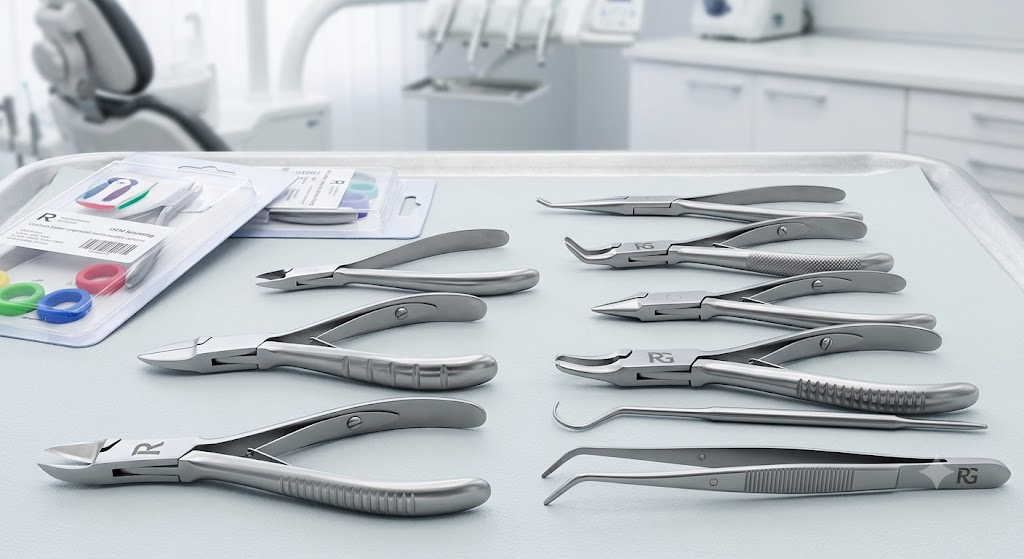
This guide explains everything you need to know about OEM/ODM services for orthodontic instruments, how the manufacturing process works, quality standards to expect, customization options, and how to choose the right manufacturing partner.
What Are OEM Orthodontic Tools?
OEM (Original Equipment Manufacturer) refers to orthodontic instruments manufactured according to a buyer’s specifications while being sold under the buyer’s own brand name.
With OEM orthodontic instruments, customers typically control:
- Product branding
- Laser logo engraving
- Packaging design
- Product labeling
- Product specifications
- Surface finish
- Material selection
- Barcode requirements
- Regulatory documentation
The manufacturer produces the instruments while maintaining confidentiality regarding your private brand.
What Are ODM Orthodontic Instruments?
ODM (Original Design Manufacturer) goes one step further.
Instead of providing complete product specifications yourself, the manufacturer already has proven instrument designs that can be customized with your branding and packaging.
ODM services are ideal for businesses wanting to:
- Launch products quickly
- Reduce development costs
- Minimize design risks
- Enter new markets faster
Many distributors choose ODM orthodontic instruments because they combine affordability with rapid production.
OEM vs ODM Orthodontic Instruments
| Feature | OEM | ODM |
|---|---|---|
| Product Design | Customer | Manufacturer |
| Brand Name | Customer | Customer |
| Packaging | Customized | Customized |
| Product Development | Customer-driven | Manufacturer-driven |
| Development Cost | Higher | Lower |
| Time to Market | Moderate | Faster |
| Custom Features | Extensive | Limited |
Both approaches allow companies to build their own orthodontic product portfolio while benefiting from professional manufacturing expertise.
Why OEM Orthodontic Tools Are Growing Worldwide
Several industry trends are driving demand for custom orthodontic manufacturing.
Expansion of Private Label Brands
Dental distributors increasingly prefer selling products under their own brand instead of competing solely on price.
Private labeling builds:
- Customer loyalty
- Higher profit margins
- Brand recognition
- Long-term market value
Growth in Orthodontic Treatment
Worldwide demand continues to increase due to:
- Clear aligner adoption
- Adult orthodontics
- Cosmetic dentistry
- Pediatric orthodontics
- Digital treatment planning
This growth creates greater demand for reliable OEM orthodontic instruments.
Cost Efficiency
OEM production eliminates the need for:
- Factory investment
- Production staff
- Manufacturing equipment
- Regulatory production systems
- Quality laboratories
Instead, companies focus on branding, marketing, and sales.
Orthodontic Instruments Commonly Manufactured Under OEM Programs
Manufacturers can customize nearly every orthodontic instrument.
Orthodontic Pliers
Popular options include:
- Bird Beak Pliers
- How Plier
- Weingart Pliers
- Distal End Cutters
- Ligature Cutters
- Utility Pliers
- Three-Prong Pliers
- Loop Forming Pliers
- Torque Pliers
- Band Removing Pliers
Wire Instruments
OEM production includes:
- Wire Bending Instruments
- Arch Wire Cutters
- Wire Forming Tools
- Hard Wire Cutters
- Soft Wire Cutters
Band Instruments
Examples include:
- Band Pushers
- Band Seaters
- Band Burnishers
- Band Removing Instruments
Bracket Instruments
Custom manufacturing is available for:
- Bracket Positioning Tweezers
- Bracket Holding Forceps
- Bracket Placement Instruments
- Bracket Height Gauges
Ligature Instruments
Including:
- Mathieu Needle Holders
- Ligature Directors
- Ligature Forming Tools
- Ligature Placement Instruments
Complete Orthodontic Kits
Manufacturers also produce:
- Student Kits
- Clinical Kits
- Orthodontic Surgery Kits
- Professional Starter Kits
- Custom Instrument Sets
Customization Options Available for OEM Orthodontic Tools
One of the greatest advantages of OEM manufacturing is extensive customization.
Laser Logo Engraving
Permanent branding on:
- Instrument handles
- Joint areas
- Box joints
- Instrument shafts
Laser marking offers:
- High durability
- Professional appearance
- Easy traceability
Custom Surface Finish
Customers can choose:
- Mirror polish
- Satin finish
- Matte finish
- Sandblast finish
- Electropolished finish
Each finish offers unique advantages for aesthetics, cleaning, and glare reduction.
Material Selection
Quality manufacturers typically offer:
- German stainless steel
- Japanese stainless steel
- Surgical-grade stainless steel
- Premium medical-grade alloys
Material selection influences:
- Corrosion resistance
- Cutting performance
- Longevity
- Sterilization durability
Handle Design
Handle customization may include:
- Ergonomic grips
- Color-coded rings
- Silicone inserts
- Lightweight designs
- Anti-slip textures
Packaging Solutions
OEM packaging options include:
- Individual pouches
- Sterile packaging
- Premium gift boxes
- Distributor cartons
- Retail packaging
- Hospital bulk packs
Quality Standards for OEM Orthodontic Instrument Manufacturing
Reputable manufacturers operate under internationally recognized quality systems.
Important certifications often include:
- ISO 13485 Quality Management System
- CE compliance where applicable
- FDA registration (market dependent)
- Good Manufacturing Practices (GMP)
High-quality manufacturers also maintain complete documentation for product traceability, inspection records, and quality assurance.
Manufacturing Process for OEM Orthodontic Instruments
Professional manufacturers follow a structured production workflow.
1. Consultation
Requirements are discussed, including:
- Instrument selection
- Branding
- Packaging
- Target markets
- Compliance requirements
2. Product Design
Technical drawings are reviewed or prepared.
3. Prototype Development
Sample instruments are manufactured for approval.
4. Material Inspection
Raw materials undergo quality verification before production begins.
5. Precision Manufacturing
Processes may include:
- Forging
- CNC machining
- Grinding
- Heat treatment
- Polishing
- Assembly
6. Quality Inspection
Each batch is checked for:
- Dimensions
- Alignment
- Cutting efficiency
- Joint movement
- Surface quality
- Corrosion resistance
7. Branding
Laser engraving and custom labeling are completed.
8. Packaging
Products are packed according to customer specifications.
9. International Shipping
Finished goods are prepared for global export with the required shipping documentation.
Benefits of Partnering with an Experienced Orthodontic Instrument Manufacturer
Working with a trusted OEM partner provides numerous advantages.
Consistent Quality
Standardized manufacturing ensures every instrument meets defined performance specifications.
Lower Production Costs
Economies of scale reduce manufacturing expenses while maintaining quality.
Faster Product Launches
Established production systems shorten lead times and accelerate market entry.
Regulatory Support
Experienced manufacturers can assist with technical files, product documentation, and export paperwork required for international markets.
Flexible Order Quantities
Many suppliers accommodate both startups and large distributors through scalable production options.
Industries That Use OEM Orthodontic Tools
OEM orthodontic instruments serve a wide range of customers, including:
- Dental distributors
- Orthodontic brands
- Medical wholesalers
- Hospital procurement departments
- University dental schools
- Government healthcare agencies
- Private clinics
- Dental laboratories
- E-commerce sellers
- Import/export businesses
How to Choose the Right OEM Orthodontic Instrument Supplier
Selecting the right manufacturing partner is critical to long-term success. Consider the following:
- Proven experience in orthodontic instrument manufacturing
- International quality certifications
- Strong quality control processes
- Custom branding capabilities
- Transparent communication
- Prototype and sampling services
- Reliable production capacity
- Export experience
- Positive customer references
- Ability to provide long-term technical support
A dependable supplier should also offer clear timelines, documentation, and responsive after-sales service.
Common Challenges in OEM Manufacturing—and How to Avoid Them
Some businesses encounter delays or quality issues when working with inexperienced manufacturers. To minimize risks:
- Define technical specifications in writing.
- Approve prototypes before mass production.
- Request detailed inspection reports.
- Confirm regulatory requirements for your target market.
- Establish quality standards and acceptable tolerances in advance.
- Communicate packaging and branding requirements clearly.
A structured approval process helps ensure the finished products match your expectation.
Conclusion
The demand for OEM orthodontic tools continues to grow as dental brands, distributors, and healthcare suppliers seek high-quality, customized solutions that strengthen their market presence. Whether you choose OEM for complete design control or ODM for a faster launch, partnering with an experienced orthodontic instrument manufacturer can help you deliver reliable products while focusing on branding, customer relationships, and business growth.
By selecting a manufacturer with strong quality systems, customization capabilities, and international export experience, you can confidently expand your orthodontic product portfolio and build a trusted brand in competitive global markets.
Frequently Asked Questions:
OEM means a manufacturer produces orthodontic instruments according to your specifications, allowing you to sell them under your own brand.
OEM products are manufactured to your design or specifications, while ODM products use the manufacturer’s existing designs with your branding and packaging.
Yes. Most manufacturers offer permanent laser engraving, custom labeling, branded packaging, and private-label solutions.
High-quality OEM orthodontic tools are commonly manufactured from surgical-grade stainless steel or other medical-grade alloys that provide strength, corrosion resistance, and compatibility with repeated sterilization.
Yes. Manufacturers can create fully customized orthodontic kits based on your preferred instrument selection, branding, packaging, and target market.
Yes. Professional manufacturers can provide export documentation and produce instruments that comply with relevant international quality standards for many global markets.