
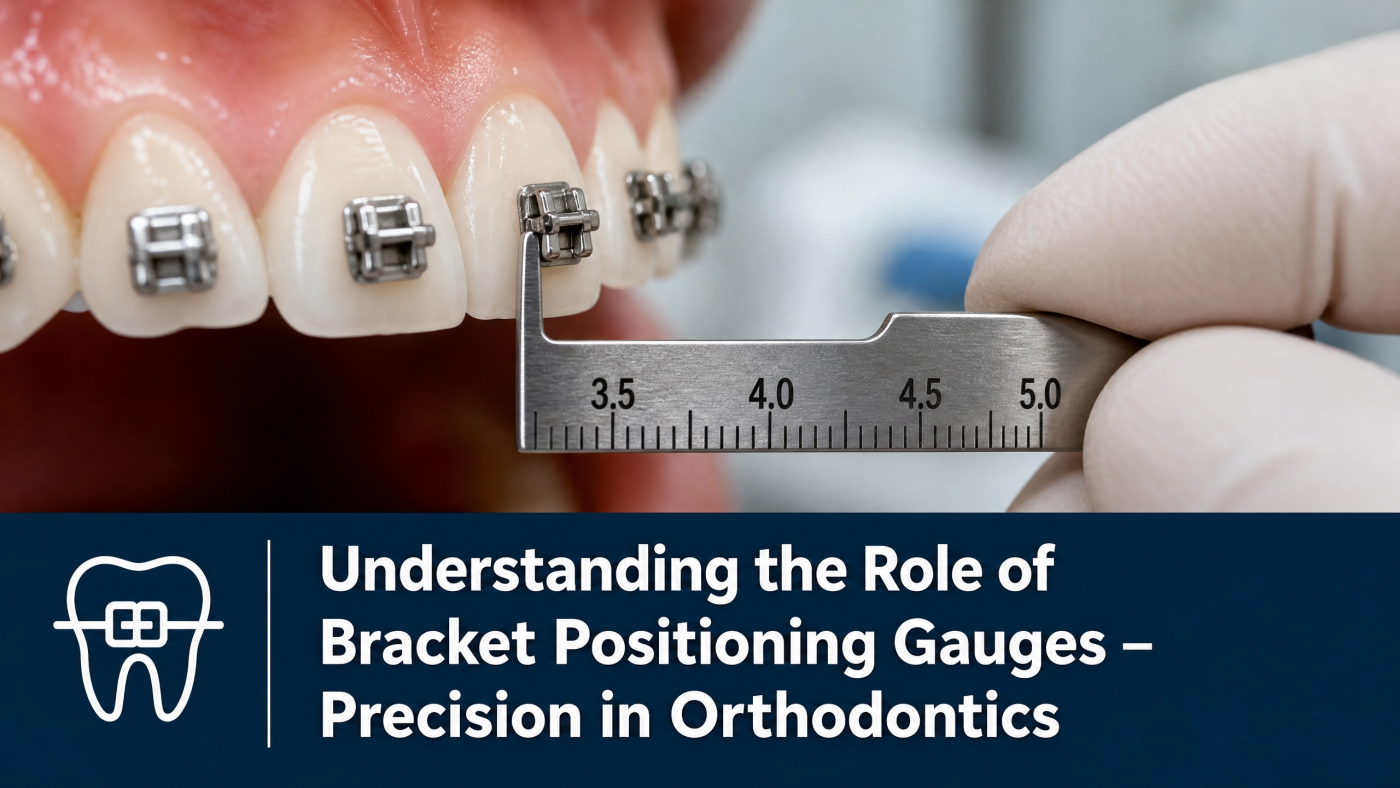
Accurate bracket placement is one of the most important factors influencing the success of orthodontic treatment. Even a slight variation in bracket height or positioning can affect tooth movement, treatment duration, and the final esthetic outcome. This is why orthodontists rely on a bracket positioning gauge to achieve precise and consistent bracket placement.
A bracket positioning gauge is a specialized orthodontic instrument designed to measure the vertical height of brackets from the incisal edge or occlusal surface during bonding. It helps clinicians place brackets accurately across all teeth, minimizing positioning errors and reducing the need for bracket repositioning later in treatment.
Whether you’re an orthodontist, dental student, clinic owner, or dental distributor, understanding the function and advantages of a bracket positioning gauge can help improve treatment quality while increasing clinical efficiency.
What Is a Bracket Positioning Gauge?
A bracket positioning gauge, also known as an orthodontic bracket positioning gauge or bracket height gauge, is a precision dental instrument used during fixed orthodontic appliance placement.
Its primary function is to:
- Measure bracket height accurately
- Ensure uniform bracket positioning
- Improve treatment consistency
- Reduce bonding errors
- Enhance orthodontic finishing results
Bracket positioning gauges are manufactured with calibrated measuring tips that correspond to common bracket heights such as:
- 3.5 mm
- 4.0 mm
- 4.5 mm
- 5.0 mm
Some advanced models feature multiple measurements in one instrument, making them versatile for different clinical cases.
Why Accurate Bracket Placement Matters
Orthodontic brackets control tooth movement through precise force application. If a bracket is placed even 0.5 mm too high or too low, it can create unwanted tooth movement that affects:
- Tooth angulation
- Torque expression
- Occlusal relationships
- Smile symmetry
- Treatment efficiency
Improper bracket placement often results in:
- Bracket repositioning
- Longer treatment time
- Additional appointments
- Increased chairside adjustments
- Higher clinical costs
Using a bracket positioning gauge significantly reduces these risks.
How Does a Bracket Positioning Gauge Work?
During bracket bonding, the clinician positions the gauge between the incisal edge (or occlusal surface) and the bracket slot.
The gauge provides a fixed vertical measurement that allows the practitioner to:
- Select the desired bracket height.
- Align the gauge with the tooth.
- Position the bracket according to the measurement.
- Verify placement before curing the adhesive.
This simple process dramatically improves placement accuracy and consistency.
Types of Bracket Positioning Gauges
Several designs are available depending on clinical preferences.
1. Boone Bracket Positioning Gauge
The Boone Gauge is among the most widely used orthodontic instruments.
Features include:
- Multiple height measurements
- Excellent visibility
- Quick bracket positioning
- Durable stainless steel construction
It is ideal for routine orthodontic bonding procedures.
2. Star Positioning Gauge
The Star Gauge features several measuring arms that provide multiple bracket height options in a single instrument.
Advantages include:
- Faster bracket selection
- Compact design
- Improved efficiency
- Easy sterilization
3. Adjustable Bracket Positioning Gauge
These gauges allow clinicians to customize bracket height based on:
- Tooth anatomy
- Treatment philosophy
- Occlusion requirements
- Individual patient needs
They are particularly useful for complex orthodontic cases.
4. Digital Bracket Positioning Instruments
Modern orthodontics increasingly incorporates digital workflows.
Some manufacturers now offer digital measuring devices that improve:
- Measurement precision
- Clinical documentation
- Workflow integration
- Treatment planning
Although less common, digital systems continue to gain popularity.
Key Features of a High-Quality Bracket Positioning Gauge
When selecting a bracket positioning gauge, clinicians should consider:
Precision Measurements
Accurate calibration ensures consistent bracket height throughout treatment.
Medical-Grade Stainless Steel
High-quality stainless steel provides:
- Corrosion resistance
- Long service life
- Autoclave compatibility
- Excellent durability
Ergonomic Design
Comfortable handling reduces clinician fatigue during long bonding sessions.
Laser-Etched Markings
Permanent measurement markings improve visibility and resist wear over time.
Easy Sterilization
Reusable instruments should withstand repeated sterilization without losing accuracy.
Benefits of Using a Bracket Positioning Gauge
Improved Bonding Accuracy
Precise bracket placement improves force transmission and treatment predictability.
Reduced Repositioning
Correct initial placement minimizes future bracket adjustments.
Shorter Treatment Time
Accurate bracket positioning allows teeth to move more efficiently, reducing overall treatment duration.
Better Esthetic Outcomes
Consistent bracket placement contributes to:
- Better smile design
- Improved tooth alignment
- Symmetrical results
Increased Clinical Efficiency
The instrument allows faster and more standardized bonding procedures.
Enhanced Patient Satisfaction
Patients benefit from:
- Fewer appointments
- More predictable results
- Shorter treatment time
Clinical Applications
Bracket positioning gauges are widely used during:
- Fixed orthodontic treatment
- Metal bracket bonding
- Ceramic bracket placement
- Self-ligating bracket systems
- Indirect bonding verification
- Orthodontic teaching and training
Step-by-Step Guide to Using a Bracket Positioning Gauge
Step 1: Prepare the Tooth
Clean and isolate the tooth before bonding.
Step 2: Select the Correct Height
Choose the measurement appropriate for the treatment plan.
Step 3: Position the Gauge
Place the gauge against the incisal edge or occlusal surface.
Step 4: Align the Bracket
Adjust the bracket until it matches the selected measurement.
Step 5: Verify Position
Double-check bracket alignment from multiple angles.
Step 6: Bond the Bracket
Light cure the adhesive while maintaining bracket position.
Common Mistakes to Avoid
Even with a positioning gauge, clinicians should avoid:
- Selecting the wrong measurement
- Ignoring tooth morphology
- Tilting the gauge during measurement
- Incomplete seating of the bracket
- Relying solely on visual estimation
Careful technique remains essential for predictable results.
Bracket Positioning Gauge vs Visual Estimation
| Feature | Bracket Positioning Gauge | Visual Estimation |
|---|---|---|
| Accuracy | Excellent | Variable |
| Consistency | High | Low |
| Treatment Efficiency | High | Moderate |
| Repositioning Risk | Low | Higher |
| Clinical Confidence | High | Depends on Experience |
The comparison clearly demonstrates why orthodontists prefer dedicated positioning instruments over manual estimation.
Materials Used in Bracket Positioning Gauges
Premium instruments are typically manufactured from:
- Surgical stainless steel
- German stainless steel
- Medical-grade stainless steel
These materials provide:
- Rust resistance
- Excellent strength
- Long lifespan
- Repeated sterilization compatibility
Maintenance and Sterilization
To maintain measurement accuracy:
- Clean immediately after use.
- Remove adhesive residues carefully.
- Sterilize according to manufacturer guidelines.
- Inspect measuring tips regularly.
- Store in protective instrument trays.
Proper maintenance extends instrument life while preserving precision.
How to Choose the Right Bracket Positioning Gauge
When purchasing a bracket positioning gauge, consider:
Clinical Needs
Choose measurements suitable for your preferred orthodontic technique.
Instrument Quality
Look for:
- Precision manufacturing
- Smooth finish
- Accurate calibration
- High-quality stainless steel
Ergonomics
Comfortable instruments improve workflow during lengthy bonding procedures.
Sterilization Compatibility
Ensure compatibility with standard autoclave procedures.
Manufacturer Reputation
Purchase instruments from trusted dental instrument manufacturers known for quality control.
Why Every Orthodontic Practice Needs a Bracket Positioning Gauge
Orthodontic treatment demands precision. Small placement errors can influence the entire course of treatment.
A bracket positioning gauge provides:
- Consistent bracket heights
- Predictable tooth movement
- Improved treatment efficiency
- Better finishing quality
- Reduced chair time
- Greater patient satisfaction
For modern orthodontic practices, it is considered an essential instrument rather than an optional accessory.
Final Thoughts
The bracket positioning gauge is one of the most valuable instruments in orthodontics for achieving precise, reproducible bracket placement. By ensuring consistent bracket height and minimizing placement errors, it supports efficient tooth movement, shorter treatment times, and superior esthetic outcomes.
Whether you are establishing a new orthodontic practice, upgrading your clinical armamentarium, or training the next generation of orthodontists, investing in a high-quality bracket positioning gauge is a practical step toward delivering predictable, high-quality care. As orthodontic techniques continue to evolve, precision instruments like bracket positioning gauges will remain fundamental to achieving reliable and successful treatment outcomes.
Frequently Asked Questions (FAQs)
What is a bracket positioning gauge used for?
A bracket positioning gauge is used to measure and standardize bracket height during orthodontic bonding, ensuring accurate and consistent bracket placement.
Why is bracket height important?
Correct bracket height allows proper tooth movement, reduces repositioning, improves finishing, and shortens treatment time.
Can beginners use a bracket positioning gauge?
Yes. Dental students and newly trained orthodontists commonly use bracket positioning gauges because they improve accuracy and reduce technique-related errors.
What material is best for a bracket positioning gauge?
Medical-grade stainless steel is preferred because it offers durability, corrosion resistance, and compatibility with repeated sterilization.
Are bracket positioning gauges reusable?
Yes. Most professional bracket positioning gauges are reusable after proper cleaning and autoclave sterilization.
How often should a bracket positioning gauge be replaced?
With proper maintenance, a high-quality stainless steel bracket positioning gauge can remain accurate and functional for many years.