
In this comprehensive guide, we’ll explore what are, the different types available, their clinical applications, maintenance tips, and what dental professionals should consider when selecting high-quality orthodontic instruments.
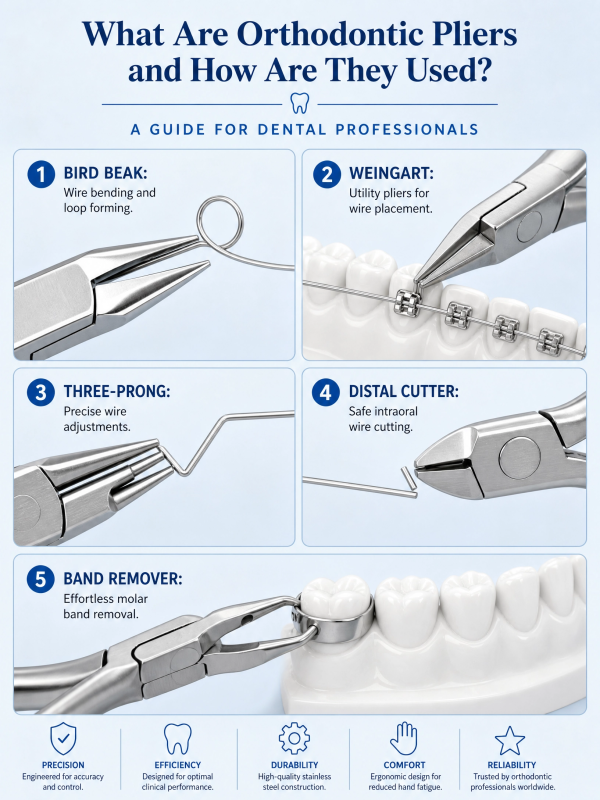
What Are Orthodontic Pliers?
Orthodontic Instrument are specialized dental hand instruments designed specifically for manipulating orthodontic wires, brackets, bands, elastics, and removable appliances during orthodontic treatment.
Unlike general dental pliers, orthodontic pliers feature carefully engineered beaks, tips, cutting edges, and hinges that provide maximum precision while minimizing damage to orthodontic materials.
They are routinely used throughout every stage of treatment, including:
- Initial appliance placement
- Archwire adjustment
- Wire bending
- Loop formation
- Ligature placement
- Bracket removal
- Band removal
- Appliance repair
- Finishing and detailing
These instruments help orthodontists make precise adjustments measured in fractions of a millimeter.
Why Orthodontic Pliers Are Essential in Modern Orthodontics
Orthodontic treatment requires controlled force and exceptional precision.
High-quality help clinicians:
- Improve procedural accuracy
- Reduce chairside treatment time
- Create precise wire bends
- Prevent damage to brackets
- Minimize patient discomfort
- Increase treatment efficiency
- Enhance overall clinical outcomes
- Improve ergonomics during lengthy procedures
Without properly designed , many orthodontic procedures would become difficult, inefficient, or impossible.
Types of Orthodontic Pliers
Different orthodontic procedures require different plier designs. Each instrument is engineered for a specific purpose.
1. Bird Beak Pliers
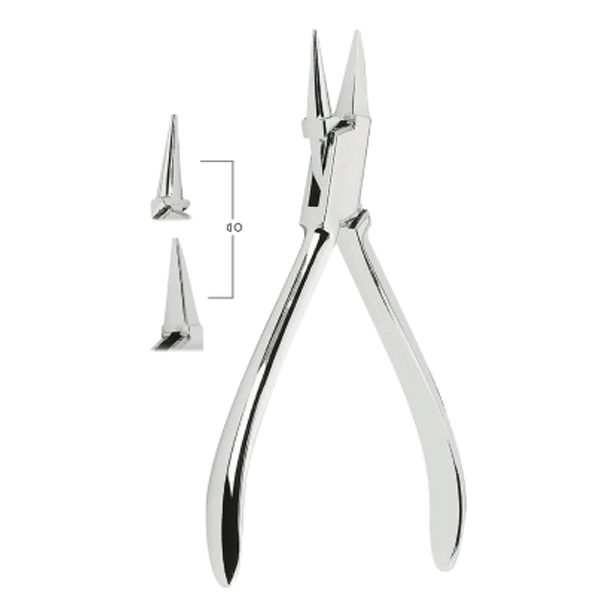
Bird Beak Pliers are among the most versatile orthodontic instruments.
Primary Uses
- Bending round wires
- Forming loops
- Creating springs
- Adjusting removable appliances
- Wire contouring
Features
- One round beak
- One flat beak
- Excellent wire control
- Suitable for stainless steel and light orthodontic wires
2. Weingart Utility Pliers
These are one of the most frequently used during routine appointments.
Uses
- Inserting archwires
- Removing archwires
- Holding orthodontic wires
- Placing ligatures
- Accessing posterior areas
Advantages
- Serrated gripping tips
- Excellent visibility
- Firm wire control
- Reduced slipping
3. Distal End Cutter
A Distal End Cutter is designed to trim excess archwire extending beyond the molar tube.
Clinical Applications
- Cutting distal archwire
- Preventing soft tissue irritation
- Improving patient comfort
Key Features
- Tungsten carbide cutting edges
- Wire-holding mechanism
- Precision cutting
4. Ligature Cutter
Ligature cutters are specifically designed for cutting fine orthodontic ligature wires.
Used For
- Stainless steel ligatures
- Ligature wire removal
- Wire trimming
These cutters produce clean cuts without distorting surrounding components.
5. Hard Wire Cutter
Hard Wire Cutters are built for cutting thicker orthodontic wires.
Suitable materials include:
- Stainless steel
- Nickel Titanium (NiTi)
- Beta Titanium (TMA)
- Heavy rectangular wires
They incorporate hardened tungsten carbide inserts for extended durability.
6. Bracket Removing Pliers
Bracket Removing Pliers safely debond orthodontic brackets after treatment completion.
Benefits
- Controlled bracket removal
- Reduced enamel stress
- Lower fracture risk
- Improved patient comfort
7. Band Removing Pliers
These pliers are specifically designed to remove orthodontic molar bands.
They feature:
- Protective plastic tips
- Controlled leverage
- Comfortable removal
- Reduced enamel trauma
8. Three-Prong Pliers
Three-Prong Pliers are ideal for adjusting orthodontic appliances.
Applications
- Wire contouring
- Appliance adjustment
- Minor bends
- Finishing corrections
9. Loop Forming Pliers
Loop Forming Pliers produce uniform loops in orthodontic wires.
Commonly used for:
- Closing loops
- Open loops
- Vertical loops
- Retention appliances
10. Torque Forming Pliers
Torque pliers create controlled third-order bends within orthodontic archwires.
These adjustments help achieve:
- Proper tooth angulation
- Root positioning
- Final finishing corrections
Common Clinical Uses of Orthodontic Pliers
They are used throughout nearly every phase of orthodontic treatment.
During Diagnosis and Appliance Placement
Clinicians use orthodontic pliers to:
- Position brackets
- Adapt bands
- Insert archwires
- Place elastics
- Secure ligatures
During Active Treatment
As treatment progresses, pliers are used for:
- Wire adjustments
- Loop activation
- Torque corrections
- Appliance repair
- Archwire replacement
During Finishing
Precise detailing often involves:
- Minor wire bends
- Final torque adjustments
- Root positioning
- Space closure refinements
During Debonding
At treatment completion, orthodontic pliers help:
- Remove brackets
- Remove molar bands
- Cut ligatures
- Remove residual wires safely
Materials Used in Orthodontic Pliers
Premium are typically manufactured from:
Surgical Stainless Steel
Benefits include:
- Corrosion resistance
- High strength
- Excellent sterilization compatibility
- Long service life
Tungsten Carbide Inserts
Commonly used in cutting pliers because they provide:
- Superior hardness
- Longer edge retention
- Cleaner cuts
- Increased durability
Satin Finish
Many premium instruments feature a satin or matte finish to:
- Reduce glare
- Improve visibility
- Resist fingerprints
- Enhance handling
Ergonomic Design Matters
Orthodontic procedures often require repetitive hand movements.
Modern incorporate ergonomic features such as:
- Lightweight construction
- Balanced weight distribution
- Comfortable finger rests
- Smooth box joints
- Reduced hand fatigue
Ergonomic instruments contribute to greater precision during extended procedures.
How to Choose the Best Orthodontic Pliers
When purchasing orthodontic instruments, consider the following factors.
Precision Manufacturing
Look for:
- Accurate tip alignment
- Smooth hinge action
- Minimal play
- High manufacturing tolerance
Material Quality
Choose pliers made from:
- Surgical-grade stainless steel
- Tungsten carbide inserts (for cutters)
- Rust-resistant alloys
Cutting Performance
Cutting pliers should provide:
- Clean wire cuts
- No wire deformation
- Long-lasting sharpness
Comfort
Handles should allow:
- Better grip
- Reduced fatigue
- Enhanced control
Sterilization Compatibility
Quality should withstand repeated:
- Steam autoclaving
- Chemical disinfection
- Routine cleaning cycles
without corrosion or loss of precision.
Proper Care and Maintenance
Maintaining extends their lifespan and preserves clinical performance.
Recommended Maintenance Steps
- Clean immediately after use.
- Remove blood and debris before sterilization.
- Lubricate box joints regularly.
- Inspect cutting edges frequently.
- Store instruments in sterilization cassettes.
- Avoid dropping instruments.
- Follow manufacturer sterilization guidelines.
Proper maintenance reduces repair costs and ensures consistent clinical performance.
Common Mistakes to Avoid
Many instruments are damaged through improper use.
Avoid:
- Cutting hard wires with ligature cutters
- Using dull cutting pliers
- Forcing oversized wires
- Skipping lubrication
- Improper sterilization
- Mixing with general-purpose tools
Using each instrument for its intended purpose helps preserve accuracy and longevity.
Advantages of High-Quality Orthodontic Pliers
Investing in premium offers several benefits.
Improved Precision
Accurate wire manipulation leads to more predictable tooth movement.
Greater Efficiency
Well-designed instruments reduce chair time.
Enhanced Patient Comfort
Smooth adjustments minimize tissue trauma.
Longer Instrument Life
Premium materials withstand years of daily clinical use.
Better Clinical Outcomes
Reliable instruments contribute to consistent treatment results.
Conclusion
They are indispensable instruments in every orthodontic practice, enabling clinicians to perform precise wire adjustments, bracket placement, appliance modifications, and finishing procedures with confidence. Their specialized designs support accuracy, efficiency, and patient comfort throughout every stage of treatment.
Choosing high-quality made from durable materials such as surgical-grade stainless steel and tungsten carbide ensures consistent performance, longer instrument life, and dependable clinical outcomes. Combined with proper maintenance and sterilization, these precision instruments remain a valuable investment for any orthodontic practice committed to delivering safe, effective, and predictable orthodontic care.
Frequently Asked Questions (FAQs)
What are orthodontic pliers used for?
They are used to bend, cut, hold, place, adjust, and remove orthodontic wires, brackets, bands, and other appliances during orthodontic treatment.
What material are orthodontic pliers made from?
Most high-quality orthodontic pliers are manufactured from surgical-grade stainless steel, while cutting instruments often include tungsten carbide inserts for enhanced durability and cutting performance.
Can orthodontic pliers be sterilized?
Yes. Quality of these instruments are designed to withstand repeated autoclave sterilization and routine disinfection without compromising performance.
Why are there different types of orthodontic pliers?
Each type is designed for a specific task, such as wire bending, wire cutting, bracket removal, loop formation, or appliance adjustment, allowing clinicians to perform procedures with greater precision and efficiency.
How long do orthodontic pliers last?
With proper cleaning, lubrication, sterilization, and maintenance, premium orthodontic pliers can provide many years of reliable clinical service.