Types of Endodontic Files Explained – Endodontic File Types
When it comes to successful root canal treatments, precision and control are everything. One of the key factors behind effective cleaning and shaping of the root canal system is the endodontic file. These specialized instruments help dentists and endodontists remove infected pulp tissue, shape the canal, and prepare it for filling. But not all files are created equal. There are several types of endodontic files, each designed for specific stages and techniques in root canal therapy. In this post, we’ll break down the main types of endodontic files, their characteristics, and how they differ in function and design.
What Are Endodontic Files?
Endodontic files are small, flexible instruments used inside the root canal to clean, shape, and smooth the canal walls. They can be manual or rotary, made from materials like stainless steel or nickel-titanium (NiTi), depending on the clinical need.
The files vary in taper, length, tip size, and cross-sectional design, allowing precise adaptation to the canal’s anatomy.
1. K-Files (Kerr Files)
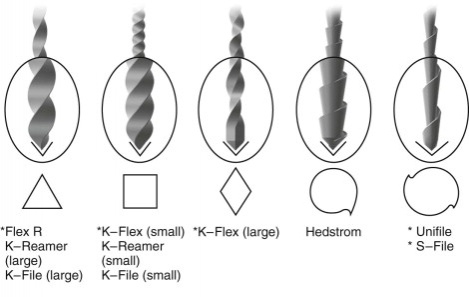
K-Files are among the most common and widely used endodontic files. They are made by twisting a square or triangular stainless steel wire into a spiral shape.
Key Features:
- Excellent tactile feedback and control
- Used with a push-pull filing motion
- Ideal for initial canal negotiation and cleaning
Best For:
Initial shaping and cleaning in straight or slightly curved canals.
2. H-Files (Hedström Files)
H-Files, or Hedström Files, have a unique design with a series of sharp, spiral cutting edges.
Key Features:
- Made from round stainless-steel blanks
- Extremely sharp and efficient in cutting dentin
- Used with pull strokes only (not rotary)
Best For:
Removing debris and enlarging the canal efficiently, especially after initial negotiation.
3. Reamers
Endodontic reamers look similar to K-files but have fewer spirals per length, making them less aggressive.
Key Features:
- Used with rotational or reaming motion
- Removes dentin gently with less debris compaction
- Often made from stainless steel
Best For:
Enlarging the canal with less risk of ledging or transportation.
4. NiTi Rotary Files
Modern endodontics relies heavily on Nickel-Titanium (NiTi) rotary files, thanks to their superior flexibility and cutting efficiency.
Key Features:
- Used with motorized handpieces
- High flexibility—ideal for curved canals
- Available in various tapers, designs, and cutting angles
Common Systems Include:
- ProTaper
- WaveOne
- HyFlex
- OneShape
Best For:
Efficient shaping of curved or complex canals with reduced operator fatigue and faster results.
5. Hand NiTi Files
These combine the flexibility of NiTi with the tactile control of manual operation.
Key Features:
- Gentle on canal walls
- Reduces risk of canal transportation or breakage
- Ideal for negotiation and glide path preparation
Best For:
Delicate canal shaping and pre-rotary preparation steps.
6. C-Files
C-Files are designed for calcified or extremely narrow canals.
Key Features:
- Stiffer than regular K-files
- Stronger tip for penetrating calcified dentin
- Usually made from stainless steel
Best For:
Initial negotiation of blocked or calcified canals.
7. Barbed Broaches
Though technically not files, barbed broaches are often included in discussions of endodontic instruments.
Key Features:
- Small barbs along the shaft
- Used to remove pulp tissue before instrumentation
- Extremely fragile—should be used carefully
Best For:
Initial pulp extirpation.
8. PathFiles and Glide Path Instruments
These files create a smooth and safe glide path for rotary instruments to follow.
Key Features:
- Prepares canals before rotary instrumentation
- Reduces stress on rotary files
- Enhances shaping efficiency and safety
Best For:
Establishing a secure pathway in curved or constricted canals.
Manual vs. Rotary Files: Key Differences
| Feature | Manual Files | Rotary Files |
|---|---|---|
| Operation | Hand motion | Motorized |
| Material | Mostly stainless steel | Mostly NiTi |
| Flexibility | Moderate | High |
| Efficiency | Slower | Faster |
| Best For | Initial negotiation | Shaping and finishing |
Final Thoughts
Choosing the right endodontic file type depends on the case complexity, canal anatomy, and clinician preference. While manual files offer superior tactile control, rotary NiTi systems have revolutionized root canal therapy by improving efficiency, safety, and consistency.
By understanding the different types of endodontic files—and their ideal applications—dentists can achieve more predictable and successful endodontic outcomes.