

Suction tips are essential in every dental and surgical setting. They help maintain a clear working field by removing saliva, blood, water, and debris during procedures. When choosing suction tips, one common question is whether metal or plastic tips are the better option.
Both materials have their benefits, but the right choice depends on your practice’s workflow, sterilization setup, and long-term budget. This guide compares metal and plastic suction tips in terms of durability, sterilization, comfort, and cost.
Why Suction Tip Material Matters
The material of a suction tip affects:
- Instrument lifespan
- Sterilization process
- Infection control
- Procedure efficiency
- Patient comfort
- Overall operating costs
Selecting the right suction tip can improve both clinical performance and patient safety.
Metal Suction Tips
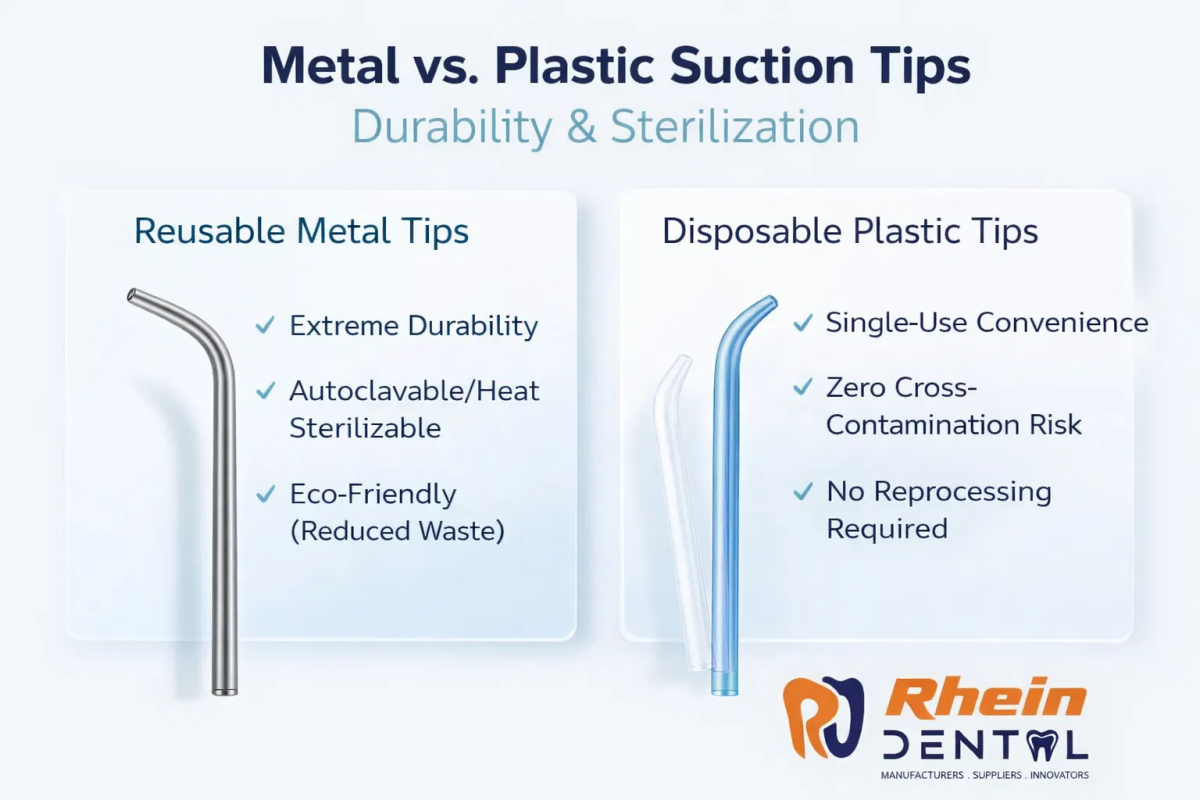
Metal suction tips are typically made from stainless steel and are designed for repeated use. They are widely used in dental surgeries, oral procedures, and hospital operating rooms.
Advantages of Metal Suction Tips
1. High Durability
Metal suction tips are built to last. They resist bending, cracking, and wear even after frequent use.
2. Autoclavable and Reusable
Stainless steel tips can withstand repeated steam sterilization without losing shape or performance.
3. Strong Suction Performance
Their rigid structure helps maintain consistent suction flow during procedures.
4. Cost-Effective Over Time
Although the upfront cost is higher, reusable metal tips reduce replacement expenses over the long term.
5. Professional-Grade Reliability
Metal tips are often preferred in high-volume clinics where dependable performance matters.
Considerations for Metal Tips
- Higher initial purchase cost
- Require proper cleaning between uses
- Need sterilization equipment and trained staff
- Slightly heavier than plastic options
Plastic Suction Tips
Plastic suction tips are usually disposable and intended for single-patient use. They are commonly used in general dentistry and routine procedures.
Advantages of Plastic Suction Tips
1. Excellent Infection Control
Single-use plastic tips reduce the risk of cross-contamination because they are discarded after use.
2. Lightweight and Comfortable
Plastic tips are easier to handle and may feel more comfortable for both clinician and patient.
3. Convenient and Time-Saving
No cleaning or sterilization is required, saving staff time.
4. Lower Upfront Cost
Plastic tips are inexpensive to buy in bulk.
5. Variety of Sizes and Colors
Many disposable tips come in different diameters and styles for specific procedures.
Considerations for Plastic Tips
- Less durable than metal
- Can crack or deform under pressure
- Ongoing replacement costs add up
- More waste generated
Sterilization Comparison
Metal Suction Tips
Metal tips require:
- Thorough cleaning after use
- Internal lumen flushing
- Ultrasonic cleaning (if needed)
- Autoclave sterilization
This ensures full decontamination and safe reuse.
Plastic Suction Tips
Most plastic tips are:
- Pre-sterilized or clean-packed
- Single-use only
- Not suitable for autoclaving in many cases
This makes them convenient but less sustainable.
Which Option Is Better for Your Practice?
Choose Metal Suction Tips If:
- You perform surgical or advanced procedures
- You want long-term savings
- You have reliable sterilization systems
- You need stronger, more precise suction
Choose Plastic Suction Tips If:
- You prioritize speed and convenience
- You want simple infection control
- You run a busy general practice
- You prefer single-use safety
Final Thoughts
Both metal and plastic suction tips have an important place in modern dental care. Metal tips offer strength, durability, and long-term value, while plastic tips provide convenience and simplified infection control.
The best choice depends on your clinical needs, patient volume, and sterilization capabilities. Many practices benefit from keeping both options available for different procedures.