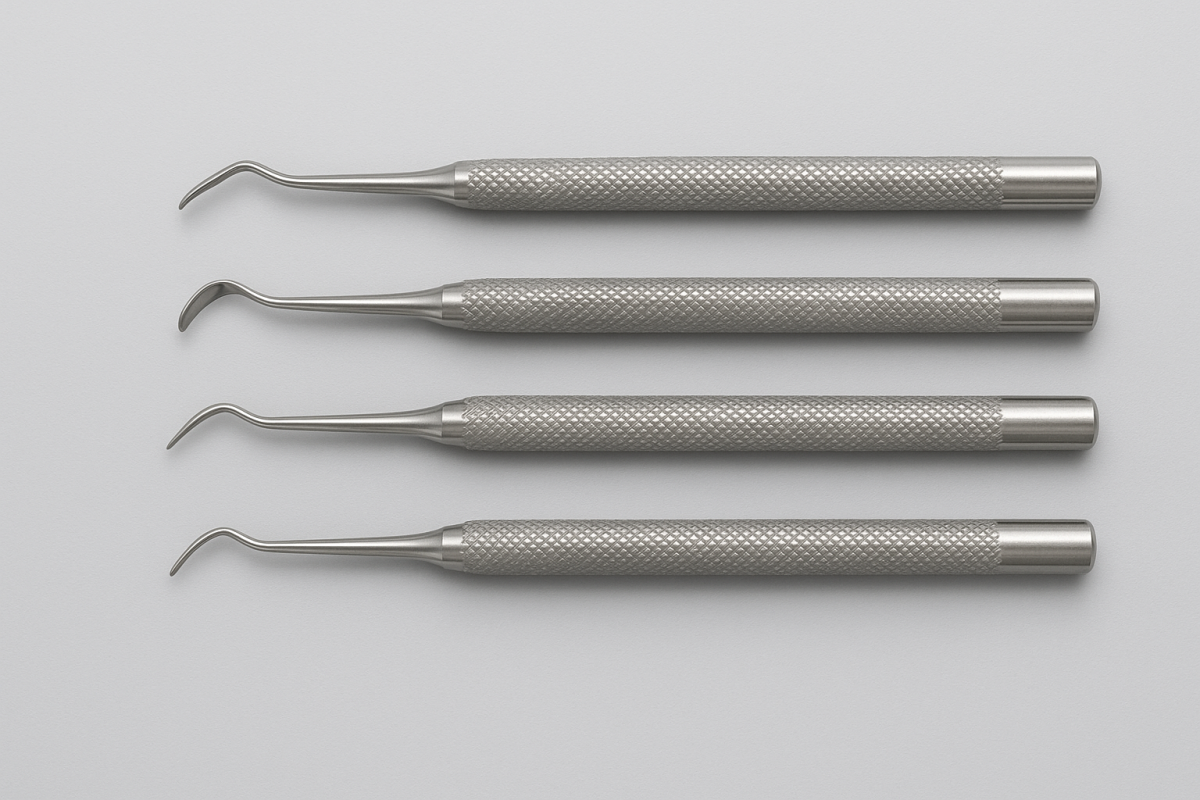
Curettage Tools for Endodontic Surgery – Understanding Endodontic Curettes
In the field of modern endodontics, precision and control are crucial for achieving predictable surgical outcomes. Among the various instruments used in endodontic microsurgery, endodontic curettes play a vital role in ensuring the complete removal of pathological tissue while preserving healthy structures. These specialized curettage tools for endodontic surgery are indispensable for enhancing visibility, accuracy, and success rates during periradicular procedures.
What Are Endodontic Curettes?
Endodontic curettes are small, spoon-shaped instruments designed for debriding soft and granulation tissue from the root-end area during endodontic surgery. They are used to remove infected or necrotic tissue, clean periapical lesions, and prepare the surgical site for further treatment such as root-end resection or retrograde filling.
Unlike general surgical curettes, endodontic curettes are designed with a more refined, delicate tip and ergonomic handle, allowing for precise manipulation in the confined surgical field of a tooth’s apex.
Key Features of Endodontic Curettes
- Precision Cutting Edge
The working end of an endodontic curette is typically spoon- or scoop-shaped, with a sharpened rim designed to efficiently remove granulation tissue without damaging surrounding bone or root structure. - Micro-Sized Working End
The tips are smaller and thinner than those of periodontal or general surgical curettes, ensuring optimal access to narrow periapical areas and minimal invasiveness. - Ergonomic Handle Design
Lightweight, textured handles provide enhanced tactile sensitivity and control — essential for delicate surgical procedures under magnification. - Material and Durability
Most curettes are made of high-quality surgical stainless steel or titanium, offering strength, corrosion resistance, and ease of sterilization.
Types of Endodontic Curettes
Endodontic curettes come in various sizes and shapes to suit different clinical scenarios. Common types include:
- Spoon Curettes – Ideal for scraping granulation tissue and cleaning the bony cavity.
- Microsurgical Curettes – Designed with smaller working ends for enhanced precision under an operating microscope.
- Double-Ended Curettes – Offer two differently sized tips for versatility and convenience during surgery.
Applications in Endodontic Surgery
Endodontic curettes are primarily used in periradicular surgery (also known as apicoectomy or root-end surgery) for:
- Removing periapical cysts, abscesses, and granulomas
- Cleaning and debriding the root apex
- Preparing the site for root-end filling or retrograde obturation
- Ensuring a clean, infection-free field for tissue healing
By thoroughly removing inflamed tissue and debris, curettage tools promote faster healing and long-term success of surgical endodontic treatments.
Best Practices for Using Endodontic Curettes
- Use Under Magnification – Operating microscopes or loupes enhance visibility, helping the clinician control tissue removal with minimal trauma.
- Maintain Sharpness – Regular inspection and sharpening are essential for consistent performance.
- Gentle, Controlled Motion – Avoid excessive force; controlled scraping prevents unnecessary bone loss.
- Sterilization and Maintenance – Follow strict infection-control protocols to maintain instrument longevity and patient safety.
Choosing the Right Curettage Tools
When selecting endodontic curettes, clinicians should consider:
- The size and location of the surgical site
- The type of lesion being treated
- The level of magnification used during surgery
- The ergonomic comfort of the handle
Brands like Hu-Friedy, Kerr, LM Instruments, and Carl Martin manufacture specialized endodontic curettes designed to meet the demands of precision endodontic surgery.
Conclusion
Endodontic curettes are essential tools in achieving clean, well-prepared surgical fields and successful healing outcomes in endodontic microsurgery. Their precise design, durability, and versatility make them indispensable for every clinician performing apical surgery.
Whether you are performing a routine periapical curettage or a complex root-end procedure, the right curettage tool ensures precision, control, and confidence throughout every step of the treatment.