Innovations in Endodontic Technology: Exploring the Latest Endodontic Equipment
The field of endodontics, often regarded as one of the most precise branches of dentistry, has undergone remarkable technological advancements in recent years. Root canal therapy and other endodontic procedures demand accuracy, efficiency, and patient comfort, and modern innovations in equipment have transformed the way endodontists diagnose, treat, and manage dental conditions.
1. Digital Imaging and 3D Technology
One of the most significant breakthroughs in endodontics is the integration of digital imaging. Traditional X-rays have been largely supplemented by Cone Beam Computed Tomography (CBCT), which provides a three-dimensional view of the tooth and surrounding structures. This allows endodontists to:
- Detect complex root canal anatomies
- Identify hidden fractures or lesions
- Plan treatments with unparalleled precision
Additionally, digital imaging reduces radiation exposure compared to conventional methods and enables quicker diagnostics, enhancing patient experience.
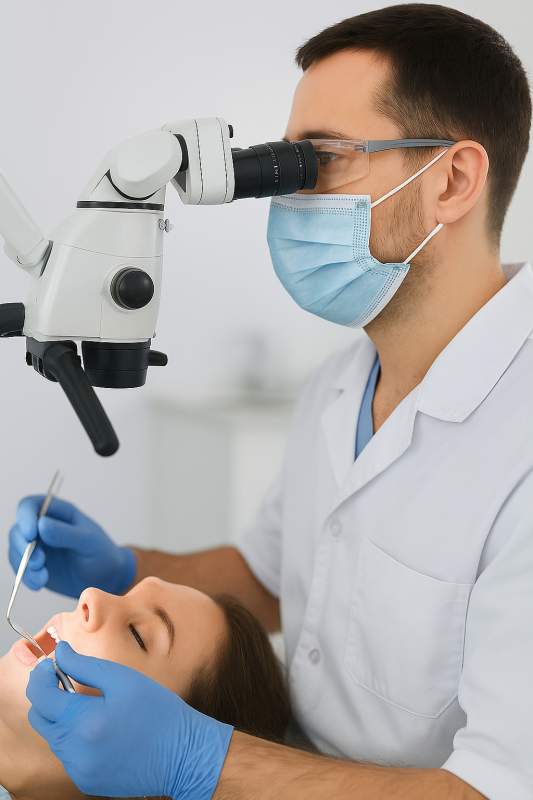
2. Advanced Endodontic Microscopes
Modern endodontic microscopes have revolutionized how dentists visualize the root canal system. High-definition microscopes offer:
- Enhanced illumination and magnification
- Improved accuracy in locating tiny canals
- Greater ability to remove debris and infected tissue
By enabling endodontists to see details invisible to the naked eye, these microscopes increase the success rate of treatments and reduce procedural errors.
3. Rotary Endodontic Systems
Manual files are gradually being replaced by rotary endodontic systems, powered by electric motors and designed to efficiently clean and shape root canals. These systems:
- Reduce treatment time significantly
- Minimize procedural errors such as ledging or canal transportation
- Offer more consistent and predictable results
Modern rotary systems are often coupled with torque-controlled motors, ensuring safety while navigating intricate canal anatomy.
4. Ultrasonic Devices in Endodontics
Ultrasonic technology is now widely used in endodontics for cleaning and preparing canals, as well as for removing broken instruments or posts. The benefits include:
- Enhanced debris removal from hard-to-reach areas
- Better irrigation of the root canal system
- Minimally invasive procedures that preserve more tooth structure
These devices complement rotary systems, making treatments more efficient and successful.
5. Laser-Assisted Endodontics
Lasers have found a growing role in modern endodontic practice. Laser-assisted treatments can:
- Disinfect canals more effectively than traditional methods
- Reduce post-operative pain and swelling
- Provide a minimally invasive alternative for certain procedures
Lasers not only improve treatment outcomes but also enhance patient comfort, which is a critical consideration in dental care.
6. Biocompatible Filling Materials and Adhesives
The latest endodontic equipment also includes advances in filling and sealing materials. Biocompatible materials, such as calcium silicate-based sealers, offer:
- Better sealing properties
- Reduced risk of reinfection
- Compatibility with the body’s natural tissues
Coupled with modern obturation devices, these materials ensure long-lasting and reliable outcomes for patients.
7. Smart Irrigation Systems
Irrigation is crucial for root canal disinfection. Innovative smart irrigation devices combine controlled flow, ultrasonic agitation, and optimized solutions to clean canals more effectively. These systems:
- Enhance penetration into complex canal anatomy
- Reduce the risk of extrusion beyond the apex
- Save time while improving treatment efficiency
Conclusion
Endodontic technology continues to evolve, merging precision, efficiency, and patient comfort in ways previously unimaginable. From CBCT imaging and rotary systems to lasers and biocompatible materials, these innovations are reshaping the practice of endodontics, enabling practitioners to deliver superior care.
For patients, this translates to shorter procedures, less discomfort, and higher treatment success rates. For endodontists, these technological advancements provide the tools to tackle even the most complex cases with confidence.
The future of endodontics is bright, and with each technological breakthrough, the possibilities for improving dental care continue to expand.