
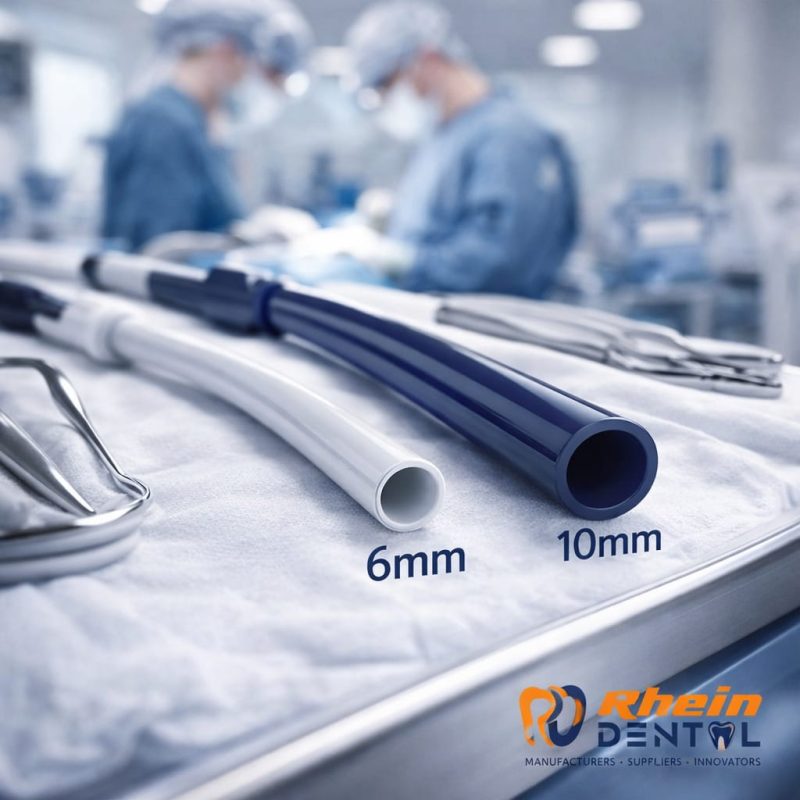
In surgical and clinical settings, efficient fluid management is critical for maintaining a clear working field and ensuring patient safety. One of the most overlooked yet impactful decisions is selecting the correct suction tip diameter. Choosing between a 6mm and 10mm suction tip can significantly influence visibility, precision, and overall procedure efficiency (Suction tip diameter selection).
This guide explores how each size performs, when to use them, and how to make the right choice based on fluid volume and clinical requirements.
Understanding Suction Tip Diameter
Suction tips are designed to evacuate fluids such as blood, saliva, irrigation solutions, and debris. The diameter of the tip directly affects (Suction tip diameter selection):
- Flow rate (how quickly fluid is removed)
- Suction القوة (strength and control)
- Precision in confined areas
In simple terms:
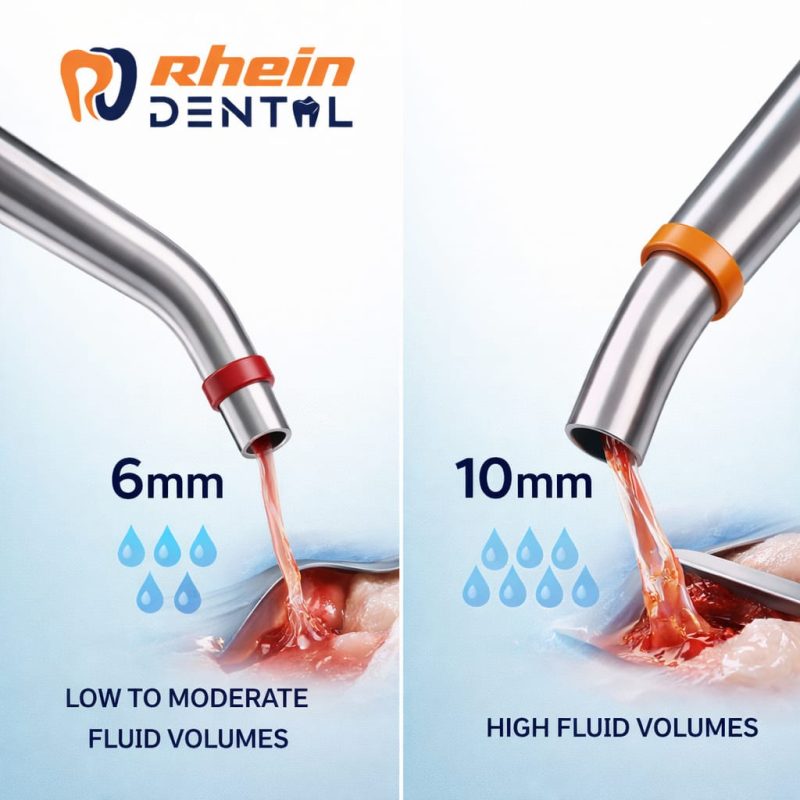
- Smaller diameter (6mm) = more control, less flow
- Larger diameter (10mm) = higher flow, less precision
6mm Suction Tips: Precision & Control
Ideal Use Cases
A 6mm suction tip is best suited for procedures requiring fine control and minimal tissue disruption.
Common applications include:
- Dental surgeries and scaling procedures
- Minor oral or periodontal procedures
- Microsurgical or delicate surgical environments
- Situations with low to moderate fluid volume
Key Advantages
- Enhanced precision in tight spaces
- Reduced risk of tissue aspiration or trauma
- Better control during delicate procedures
- Less noise and splatter in controlled environments
Limitations
- Slower fluid evacuation
- May become inefficient in high-bleeding scenarios
10mm Suction Tips: High-Volume Efficiency
Ideal Use Cases
A 10mm suction tip is designed for rapid evacuation of large volumes of fluid, making it essential in more intensive procedures.
Common applications include:
- General surgery and orthopedic procedures
- Oral surgeries with heavy bleeding
- Emergency or trauma cases
- Situations with high fluid output (blood, irrigation fluids)
Key Advantages
- High flow rate for quick fluid removal
- Prevents pooling of blood or fluids
- Improves visibility in high-volume conditions
- Reduces procedure time in demanding scenarios
Limitations
- Less precise in confined spaces
- Higher risk of tissue interference if not handled carefully
6mm vs. 10mm: Side-by-Side Comparison
| Feature | 6mm Suction Tip | 10mm Suction Tip |
|---|---|---|
| Flow Rate | Low to Moderate | High |
| Precision | Excellent | Moderate |
| Ideal Fluid Volume | Low | High |
| Surgical Use | Delicate / Dental | General / High-volume |
| Risk of Tissue Trauma | Low | Moderate (if misused) |
How to Choose the Right Size
1. Assess Fluid Volume
- Minimal bleeding or irrigation → go with 6mm
- Heavy bleeding or continuous irrigation → choose 10mm
2. Consider Procedure Type
- Precision-focused procedures → 6mm
- Speed and efficiency-focused procedures → 10mm
3. Evaluate Surgical Area
- Confined or narrow spaces → smaller diameter
- Open surgical fields → larger diameter
4. Balance Control vs. Efficiency
The best choice often depends on whether control or speed is more critical during the procedure.
Pro Tip: Use Both When Needed
In many modern surgical setups, clinicians use both 6mm and 10mm suction tips interchangeably during a single procedure:
- Start with 10mm for bulk fluid removal
- Switch to 6mm for detailed finishing work
This hybrid approach ensures optimal efficiency without compromising precision.
Final Thoughts
Selecting the correct suction tip diameter is not just a technical detail—it directly impacts surgical performance and patient outcomes. While the 6mm tip excels in precision and control, the 10mm tip dominates in high-volume fluid management.
By understanding the strengths of each, clinicians can make informed decisions that enhance both efficiency and safety in every procedure.