
Ultrasonic Devices for Canal Cleaning – Ultrasonic Endodontic Equipment
In modern endodontic practice, achieving thorough canal cleaning is more than just mechanical instrumentation—it’s also about effective irrigation, activation and disinfection of the root canal system. One of the major advances in this arena is the use of ultrasonic devices designed to enhance canal cleaning beyond what traditional needles and files can do. In this blog post we’ll explore what ultrasonic endodontic devices are, how they work, the benefits, what to consider when investing, and whether they make sense for your practice.
🔍 What Are Ultrasonic Devices in Endodontics?
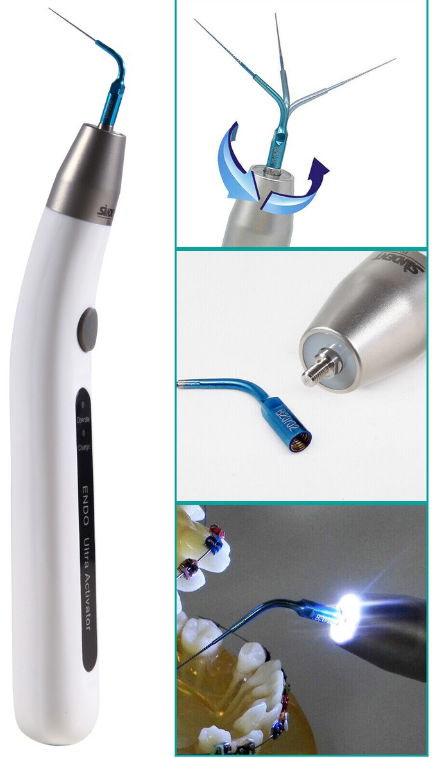
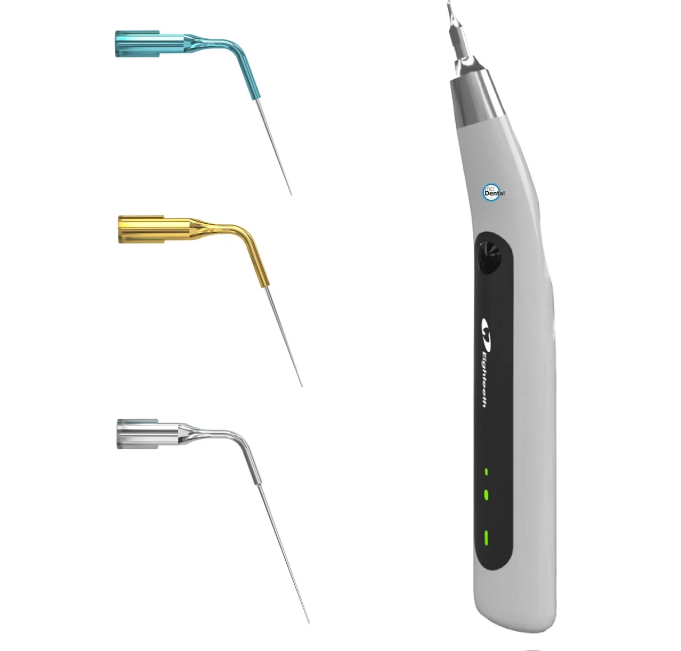
Ultrasonic devices in endodontics refer to instruments and handpieces which oscillate at ultrasonic frequencies (typically ~25-40 kHz) or activate irrigants within the canal to enhance cleaning.
Key features:
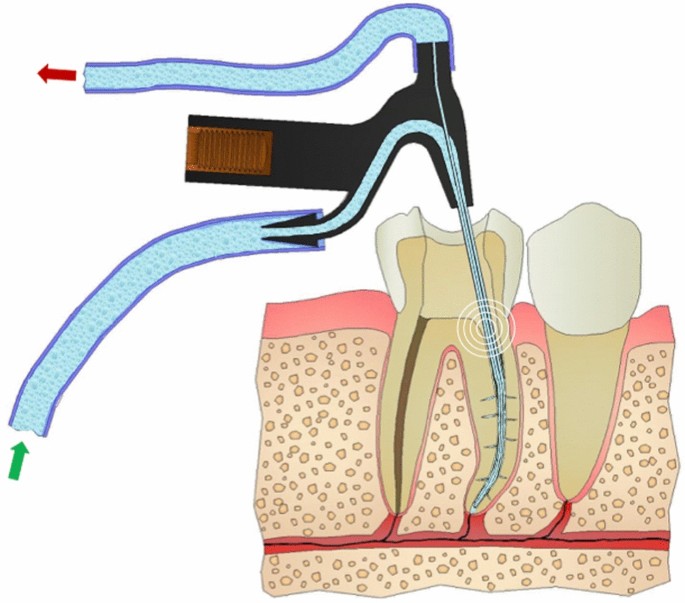
- A small non-cutting or specially designed tip is placed into a shaped canal with irrigant. The tip vibrates and transfers its energy into the fluid.
- The vibration creates two major physical phenomena: acoustic streaming (rapid fluid movement) and cavitation (formation & collapse of bubbles) inside the irrigant.
- This enhanced fluid movement helps irrigants reach difficult areas (e.g., lateral canals, isthmuses, apical third) and remove debris, smear layer, biofilm more effectively.
So rather than simply relying on mechanical shaping + static irrigation, ultrasonic activation adds a dynamic component to the irrigation process.
✅ Key Benefits of Using Ultrasonic Devices for Canal Cleaning
Here are the major advantages of using ultrasonic endodontic equipment in your root canal workflow:
1. Better Cleaning of Hard-to-Reach Anatomy
Even after shaping, there will be canal irregularities, fins, lateral canals and isthmuses that standard files cannot clean. Ultrasonic activation helps irrigants penetrate these spaces and improve cleanliness.
For example: one SEM study found that ultrasonic activation resulted in significantly better cleanliness in the apical third than conventional irrigation.
2. Enhanced Debris & Smear Layer Removal
Ultrasonic activated irrigants produce acoustic streaming which exerts shear forces on canal walls, helping remove debris and smear layer.
This leads to cleaner dentinal tubules, fewer remnants of pulp tissue and microbes, and thus likely better disinfection.
3. Improved Irrigant Efficacy
The agitation and flow improves the penetration and effectiveness of chemicals (sodium hypochlorite, EDTA, etc). It also helps overcome the “apical vapor lock” phenomenon (air/gas entrapment) that can limit irrigant contact in the apical region.
4. Efficiency & Clinical Advantage
Using ultrasonic activation may reduce the time needed for irrigation, and improve overall efficiency of cleaning-shaping-irrigation-obturation cycle. It also adds a “premium” level to your practice and may enhance outcomes.
5. Versatility Beyond Cleaning
Ultrasonic devices are not only for irrigation activation: they can assist in locating calcified canals, removing pulp stones, troughing between orifices, removing posts or broken instruments.
⚠️ What to Consider / Limitations
While ultrasonic devices bring many benefits, there are important practical considerations and limitations:
- Shaped Canal Needed: Ultrasonic activation is most effective when the canal has been shaped to an adequate size and taper. Without shaping and space for the tip and irrigant, the benefit will be reduced.
- Proper Tip / Technique Required: Using cutting ultrasonic files (rather than passive non-cutting tips) may risk transportation, perforation or undesirable dentin removal.
- Power & Frequency Settings: Higher settings are not always better. As one article states: “Less is more.” Let the tip “dance” rather than force it.
- Cost & Investment: Ultrasonic units and specialist endo tips cost more than standard irrigation tools. Maintenance and tip replacement adds cost.
- Learning Curve: The clinician must understand how to integrate ultrasonic activation into the workflow (when to activate, how long, tip placement, irrigant choice).
- Anatomical Complexity: In extremely curved or narrow canals, ultrasonic tips may not reach or may be limited; also risk of vapor lock remains. Studies show that while ultrasonic is superior to standard irrigation, it still doesn’t clean 100%.
🎯 Does Your Practice Need One?
Here are questions to help you decide if investing in ultrasonic endodontic equipment makes sense:
- Do you frequently treat complex canals (calcified canals, retreatments, isthmuses, lateral canals)?
- Are you aiming to deliver higher-level endodontic care and differentiate your practice?
- Do you have sufficient case volume and budget to amortise the cost of the unit, tips, maintenance?
- Does your current irrigation/cleaning protocol ever feel insufficient (missed anatomy, long time, difficult cases)?
- Do your staff/you have training or willingness to adopt new workflow (tip placement, activation protocols)?
If the answer is yes to many of the above, then an ultrasonic activation device is likely a valuable investment. If you mainly do straightforward primary RCTs in large, wide canals and you already have reliable outcomes, then you might still benefit—but the return may be less dramatic and you could continue with conventional methods while watching the technology mature.
🛠 Practical Workflow Tips – How to Use Ultrasonic Activation Effectively
- After shaping to final size, irrigate with e.g. 5.25% NaOCl (or whatever your protocol).
- Insert the ultrasonic tip (non-cutting, size appropriate) into the canal (1-2 mm short of working length).
- Activate at medium power for ~30-60 seconds per canal, keeping the irrigant continuously present.
- Use a fresh irrigant, exchange fluid after activation, and ensure good suction/evacuation.
- Avoid binding the tip in canal walls (let it freely oscillate) → this maximises acoustic streaming and minimises risk.
- Consider using special irrigant activators/tips designed for ultrasonics (e.g., Irrisafe).
📌 Summary
Ultrasonic devices for canal cleaning are not just a gimmick—they bring significant, evidence-based improvements to the irrigation/cleaning phase of root canal treatment. By leveraging acoustic streaming and cavitation, they help remove debris, improve irrigant efficacy, and clean more complex anatomy. However, they are not a replacement for good canal shaping and instrumentation—they are an adjunct.
If you are in a practice that values high-quality endodontic care, handles challenging cases, and is ready to invest in training and equipment, then ultrasonic activation is definitely worth considering. On the other hand, if your cases are straightforward and your outcomes already good, you might adopt selectively or wait until the technology becomes more standard.