
Introduction
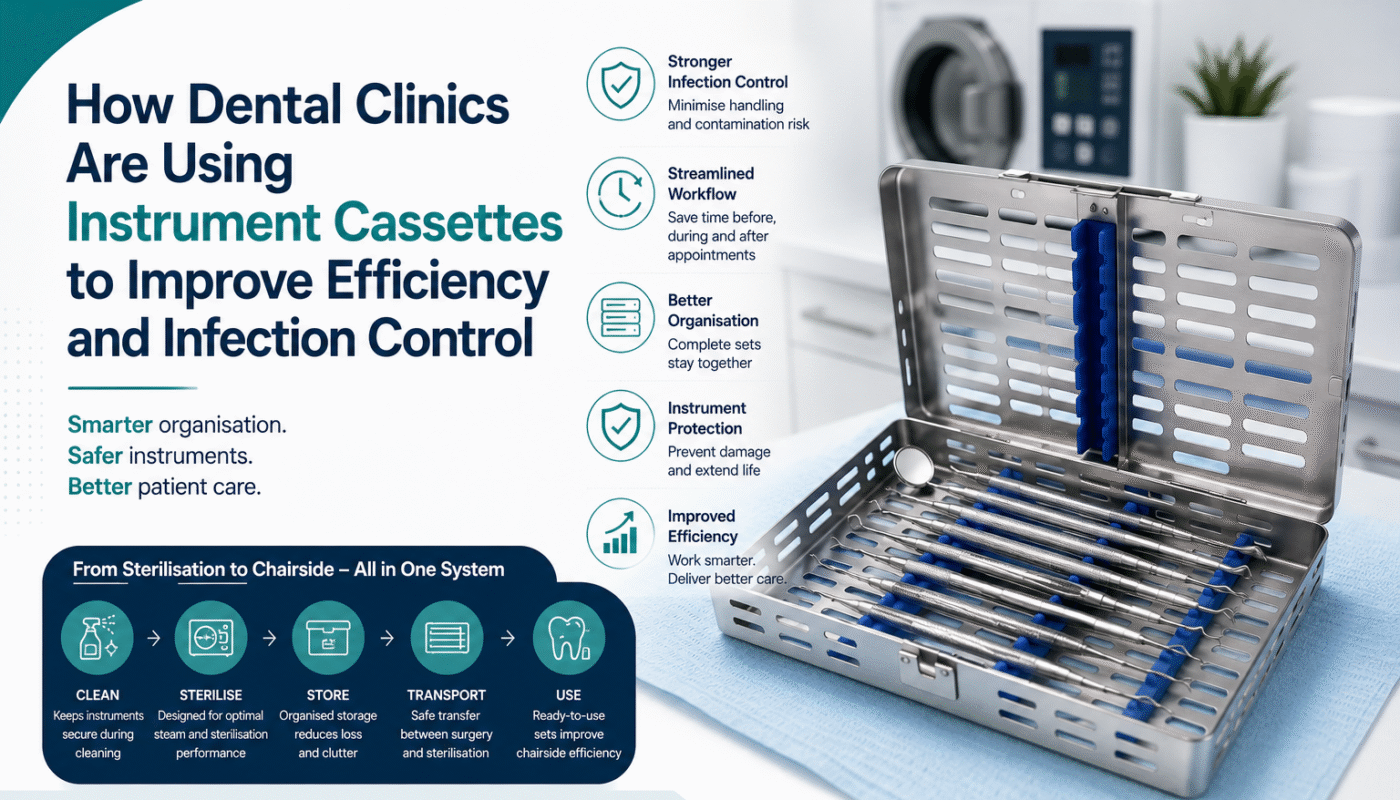
Efficient instrument reprocessing is one of the most critical aspects of modern dental and surgical practice management. In high-volume clinics, where dozens of procedures are performed daily, maintaining instrument organization while ensuring compliance with infection control protocols can be challenging. Delays in instrument preparation, sterilization errors, and misplaced tools can negatively impact productivity, patient flow, and staff efficiency (Instrument Cassette System).
Instrument cassette systems and color-coded tray organization have emerged as practical solutions for streamlining sterilization workflows. By improving instrument protection, standardizing procedure setups, and simplifying inventory management, these systems help practices achieve greater efficiency while maintaining the highest standards of infection prevention (Instrument Cassette System).
Understanding Instrument Cassette Systems
An instrument cassette is a specially designed container that securely holds instruments throughout the cleaning, sterilization, storage, and transportation process. Rather than handling instruments individually at each stage of reprocessing, the entire set remains organized within a single cassette.
Modern cassette systems are typically manufactured from high-quality stainless steel or durable medical-grade materials and are designed to allow effective penetration of cleaning solutions, ultrasonic waves, and steam sterilization.
Key Features of Instrument Cassettes
- Secure instrument retention during processing
- Reduced handling of contaminated instruments
- Protection against instrument damage
- Improved organization of procedural sets
- Faster setup and breakdown between patients
- Enhanced compliance with infection control protocols
The Challenges of Traditional Instrument Organization
Practices that rely on loose instruments often encounter several operational challenges:
Increased Risk of Instrument Damage
Repeated handling and transportation can result in scratches, bent tips, dulled cutting edges, and damaged hinges.
Higher Risk of Sharps Injuries
Manual sorting of contaminated instruments exposes staff to accidental punctures and cuts.
Longer Processing Times
Separating, cleaning, inspecting, packaging, and reassembling instruments individually consumes valuable staff time.
Missing or Misplaced Instruments
Loose instruments can easily become mixed between procedure sets, leading to delays and inventory inconsistencies.
Workflow Bottlenecks
When sterilization areas become overloaded, inefficiencies in instrument organization can create treatment delays and reduced chairside productivity.
Benefits of Instrument Cassette Systems
Enhanced Infection Control
Instrument cassettes minimize direct contact with contaminated instruments during transportation and processing. Reduced handling lowers the risk of cross-contamination and occupational exposure incidents.
Improved Sterilization Efficiency
Entire procedural sets can be processed simultaneously without disassembly. This simplifies cleaning workflows and reduces turnaround times.
Better Instrument Protection
Cassette systems prevent instruments from colliding with each other during ultrasonic cleaning and sterilization cycles, helping preserve cutting edges and delicate working tips.
Standardized Procedure Setups
Each cassette can be dedicated to a specific procedure, ensuring clinicians receive a complete and consistent instrument set every time.
Examples include:
- Examination cassettes
- Hygiene cassettes
- Restorative cassettes
- Surgical cassettes
- Implant procedure cassettes
- Orthodontic cassettes
Reduced Labor Costs
By decreasing sorting and assembly time, staff can focus on higher-value clinical and administrative responsibilities.
What Is Color-Coded Tray Organization?
Color-coded tray organization uses visual identification systems to distinguish different instrument sets, departments, clinicians, or procedures.
Trays, cassettes, silicone rails, labels, and sterilization accessories are assigned specific colors, allowing staff to instantly identify instrument groups without reading labels.
For example:
| Color | Department or Procedure |
|---|---|
| Blue | Hygiene |
| Green | Restorative |
| Red | Oral Surgery |
| Yellow | Endodontics |
| Purple | Orthodontics |
This visual organization method significantly reduces errors and improves workflow efficiency.
Advantages of Color-Coded Systems
Faster Identification
Staff can quickly locate the correct instrument set without opening multiple packages or reading detailed labels.
Reduced Human Error
Visual cues help prevent incorrect instrument selection and minimize procedural delays.
Improved Inventory Management
Missing instruments can be identified more easily when sets are standardized and color-coded.
Enhanced Staff Training
New team members can learn sterilization workflows faster through intuitive color associations.
Better Department Coordination
Multi-provider and multi-specialty practices benefit from clearly defined instrument categories that reduce confusion during busy schedules.
Combining Cassette Systems with Color-Coded Organization
The greatest efficiency gains occur when cassette systems and color-coded organization are used together.
A combined workflow typically includes:
Step 1: Procedure-Based Instrument Sets
Create dedicated cassettes for each treatment category.
Step 2: Assign Color Categories
Apply color-coded identifiers to cassettes, trays, sterilization wraps, or storage bins.
Step 3: Standardize Sterilization Processes
Develop consistent protocols for cleaning, packaging, sterilization, storage, and distribution.
Step 4: Organize Storage Areas
Store sterilized cassettes according to color groups for immediate retrieval.
Step 5: Monitor and Audit
Regularly inspect instrument sets to ensure completeness and workflow consistency.
Impact on High-Volume Practices
Dental clinics, oral surgery centers, and specialty practices that process hundreds of instruments daily can experience significant operational improvements.
Common benefits include:
- Faster operatory turnover
- Reduced sterilization bottlenecks
- Improved staff productivity
- Enhanced patient scheduling efficiency
- Better infection prevention compliance
- Lower instrument replacement costs
- Reduced workplace injuries
These improvements collectively contribute to a more efficient and profitable practice.
Best Practices for Implementation
Standardize Instrument Sets
Avoid unnecessary instrument duplication and maintain consistency across providers whenever possible.
Train the Entire Team
Clinical and sterilization staff should understand color assignments, cassette layouts, and workflow expectations.
Use High-Quality Cassettes
Durable, corrosion-resistant cassette systems provide long-term value and reliable performance.
Conduct Regular Audits
Verify that instrument sets remain complete and functional.
Replace Damaged Components Promptly
Broken rails, worn silicone inserts, or damaged cassettes can compromise organization and sterilization effectiveness.
Choosing the Right Cassette System
When selecting an instrument cassette system, consider:
- Procedure type
- Instrument capacity
- Sterilization compatibility
- Cleaning accessibility
- Durability
- Storage requirements
- Future practice growth
Practices should choose systems that support both current operational demands and long-term scalability.
Conclusion
Efficient sterilization workflows are essential for maintaining productivity, patient safety, and regulatory compliance in modern healthcare environments. Instrument cassette systems provide a structured approach to instrument processing by reducing handling, protecting valuable instruments, and improving workflow consistency. When combined with color-coded tray organization, practices can further enhance efficiency, reduce errors, and simplify inventory management.
For high-volume dental and surgical practices seeking to optimize reprocessing operations, implementing a well-designed cassette and color-coding system represents a practical investment that delivers long-term benefits in safety, organization, and operational performance.