
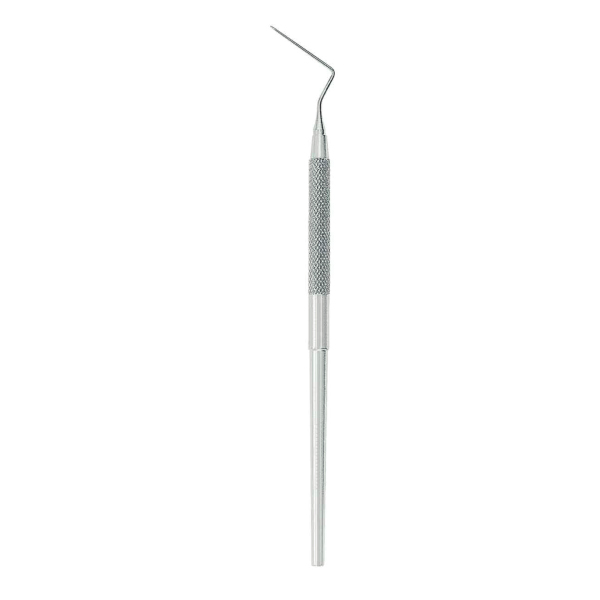
Spreader Endodontic Instruments Fig.1
Endodontic procedures require precision, and Spreader Endodontic Instruments (Fig.1) play a crucial role in ensuring effective root canal treatments.
These instruments are designed to facilitate lateral condensation of gutta-percha, thereby improving the sealing of the root canal system.
Consequently, they enhance the long-term success of endodontic therapy.
One significant advantage of spreaders is their ability to create uniform pressure along the canal walls.
As a result, they help achieve a denser fill, reducing the risk of reinfection.
Moreover, their tapered design allows for easy maneuverability within the canal, making them indispensable for dental professionals.
In addition, spreaders are available in various sizes and materials, ensuring adaptability to different clinical scenarios.
Whether using stainless steel or flexible nickel-titanium options, dentists can select the appropriate instrument based on canal morphology.
Furthermore, their ergonomic handles provide superior control, minimizing fatigue during extended procedures.
While using spreaders, it is essential to follow proper techniques to prevent excessive stress on the canal walls.
Otherwise, undue force can lead to fractures, compromising the treatment outcome.
Therefore, endodontists must be well-versed in the correct application of these tools.
Importantly, advancements in endodontic instruments have led to improved spreader designs, which enhance efficiency and patient comfort.
Additionally, integrating spreaders with modern obturation techniques results in superior clinical outcomes.
To sum up, Spreader Endodontic Instruments (Fig.1) are vital for achieving precise and successful root canal treatments.
Their ability to ensure a tight seal, along with ergonomic and material innovations, makes them a valuable asset in modern dentistry.
Ultimately, their proper use contributes to better patient care and long-term oral health.


